
The Learning Landscape: The New England Agroforester - Fall Equinox 2026
ADAPT Agroforestry Educator Cohort 2 Launches with Immersive Summer Field Experience
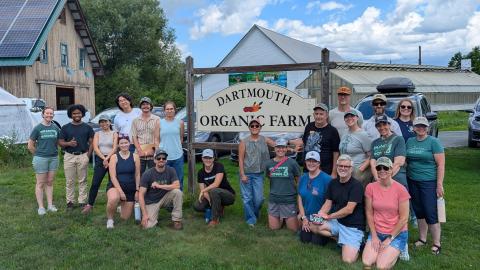
ADAPT’s second Agroforestry Educator Cohort launched this July with a two-day immersive learning experience, gathering 13 educators from Vermont, New Hampshire, and Massachusetts.
Beginning at Dartmouth College, Professor Theresa Ong and graduate student Krystal Bagnaschi introduced participants to key agroforestry concepts and shared the goals and vision of the ADAPT program. The group then toured several research and demonstration sites, including two food forests, the Experimental Linear Gap (ELG) research area, where a variety of forest farming crops are being studied, and an edible riparian buffer designed to support both ecological and food production goals.
The riparian buffer was established in partnership with ReTreeUS, and Executive Director Richard Hodges joined the group to discuss food forest design and the organization's growing network of high school food forests throughout New England.
On the second day, participants visited the Abenaki Garden in Hartford, Vermont, where Earl Hatley shared the story of the Community and Culture Acre, a teaching garden that also produces food and seeds for local food banks. Alongside the traditional Three Sisters planting, the site features hazelnuts, elderberries, ground cherries, and blueberries, with ongoing efforts to expand the area into a mature food forest system.
The cohort concluded its field experience at Howling Wolf Farm in Randolph, Vermont, where Jenn Colby showcased her innovative approach to creating silvopasture through ecological succession. Participants learned how rotationally grazed sheep are integrated into the landscape, helping transform emerging woodlands into productive agroforestry systems while supporting animal welfare and ecosystem health.
Looking ahead, both Cohort 1 and Cohort 2 participants will continue their field-based learning in Year 2 of the program. Upcoming visits include The Ecology School in Saco, Maine, on October 5 and the New Hampshire State Forest Nursery in Boscawen, NH, on November 13.
For more information, contact State Coordinator Mike Smith at 4-H Community Agriculture and NH Ag in the Classroom.
Agroforestry Educators Featured on Regional Podcast
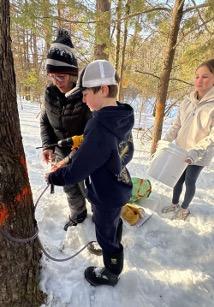
Two educators from the UNH Extension agroforestry program were recently featured on the Northeast Farm to School Collaborative's podcast, The Farm to School Podcast.
Becky Denslow, a participant in the second Maple Tales cohort and now a member of the second ADAPT Agroforestry cohort, joined Mary Hartigan Demers, a member of the first ADAPT Agroforestry cohort, to share their experiences bringing agroforestry and maple education into their schools.
The conversation highlights how educators are creating meaningful connections between students, trees, food systems, and local landscapes. Mary discusses developing a maple sugaring program at her middle school in downtown Manchester, and Becky reflects on her continuing agroforestry journey through multiple UNH Extension programs.
An upcoming episode will feature Megan Glenn and other program leaders discussing the ADAPT Agroforestry program and cohorts, helping share lessons and successes from educators across the region.
Listen to the episode on the Northeast Farm to School Collaborative's podcast page: The Farm to School Podcast.
Learning about Temperate Syntropic Agroforestry: 2-part series
Source: Cornell Climate Stewards
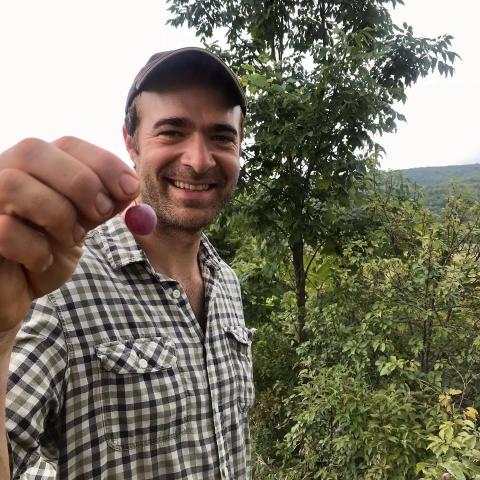
Members of the ADAPT Team participated in Erik Schellenberg's Temperate Syntropic Agroforestry webinar in August 2026. Drawing on his experience developing syntropic agroforestry systems in southern New York, Erik shared practical lessons, observations, and reflections from the field. Resources from the presentation include:
- Part 1 of the Temperate Syntropic Agroforestry series
- Syntropic Vitiforestry with Married Vines, with Erik Schellenberg
- Food Forest Podcast podcast episode with Scott Hall
Building on the introductory session, a second webinar on December 3, 2026 will take a deeper look at the theory, principles, and ecological relationships that underpin syntropic agroforestry. While some foundational concepts will be revisited, the session will be valuable for both those returning and those new to the approach. Participants are encouraged to bring questions about adapting syntropic practices to temperate climates. For more information, contact Jonathan Bates at Cornell Cooperative Extension.
ReTreeUS Model Highlights Long-Term Approaches to School Agroforestry
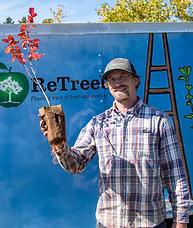
Discussions at the recent ADAPT all-hands meeting emphasized a challenge familiar to many agroforestry practitioners: how to establish educational plantings that remain productive, relevant, and well-maintained over time. ReTreeUS, a nonprofit organization working throughout New England, has spent the past 15 years developing and refining systems designed specifically to address those challenges in school settings.
Founded by Richard Hodges, ReTreeUS began with a focus on helping schools create outdoor learning spaces centered around orchards and gardens. Over time, the organization found that long-term success depended not only on planting trees and gardens but also on developing practical approaches to maintenance, educator engagement, and curriculum integration.
To date, ReTreeUS has helped establish more than 120 school and community orchards across Maine, New Hampshire, Vermont, and Massachusetts. The organization originally set a goal of creating 100 school community orchards and has since expanded its focus to include school food forests. Over the next three years, the organization plans to establish 30 school food forests, including seven new sites this year.
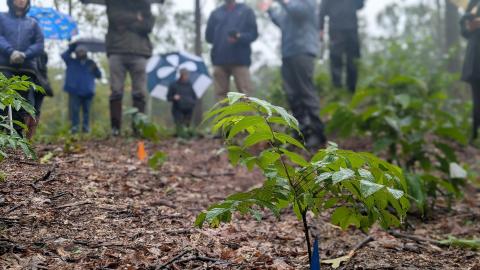
Foresters, farmers, technical advisors, service partners, and researchers observing tree plantings at a forest farming site at the ADAPT Project’s Fall 2026 All-Hands meeting.
The ReTreeUS approach centers around systems that fit the realities of school operations. School gardens often face challenges related to summer maintenance, staff turnover, and weed management. To address these, ReTreeUS developed a "back-to-school garden" model. Schools receive trays of established crops such as lettuce and kale sourced from nearby farms. Students plant the seedlings in September, allowing gardens to become immediately productive while reducing summer maintenance demands. Cover crops help suppress weeds, improve soil health, and support pollinators during periods when students are not present.
The organization's orchard model similarly prioritizes long-term stewardship. Typical school orchard plantings include 12 to 20 semi-dwarf fruit trees, often apples, pears, and peaches. ReTreeUS has developed deer-management strategies, planting protocols, and maintenance resources that schools can implement after installation. Teacher caretakers may receive stipends for ongoing stewardship, accompanied by progress reports and photographs documenting orchard development.
Educational resources are another core component of the model. ReTreeUS provides standards-aligned lessons, presentations, videos, and enrichment materials that help teachers use orchards and food forests as living classrooms. By connecting outdoor spaces directly to existing curricula, orchards become more fully integrated into school operations and student learning.
The organization's current food forest initiative expands on lessons learned through its orchard program. While each site is adapted to local conditions, plantings typically include multiple layers of perennial food-producing species. Fruit and nut trees may be combined with blueberries, raspberries, strawberries, grapevines, hazelnuts, perennial herbs, native plums, bush cherries, Cornelian cherries, and nitrogen-fixing species such as gomi. Clover is commonly seeded throughout the site as a living groundcover that suppresses weeds and contributes nitrogen to the system.
One challenge ReTreeUS has worked to address is the perception that food forests are difficult to manage or appear untidy. School sites often require landscapes that are both ecologically functional and visually organized. Sheet mulching, straw, paper, defined planting zones, and groundcover establishment reduce competition from weeds while maintaining an appearance appropriate for educational campuses.
Many of these plantings begin producing harvestable crops within the first year, particularly berries, herbs, and other perennial species. This early productivity helps sustain student interest while providing opportunities to explore topics such as food production, ecology, pollination, soil health, and agroforestry.
Feedback from participating schools consistently highlights student engagement. Educators report that outdoor learning environments often create opportunities for students who may struggle in traditional classroom settings to participate in different ways. Planting, observing, harvesting, and caring for perennial systems allows students to engage directly with ecological processes over multiple seasons.
For ADAPT partners exploring agroforestry in educational settings, the ReTreeUS model offers a practical example of how long-term stewardship, curriculum integration, and maintenance planning can support the success of school-based agroforestry projects. As interest in school food forests continues to grow across New England, these experiences provide useful insights into how agroforestry systems can become lasting educational and community assets.
Leafing Through the Latest Food and Farming Books
Civil Eats' Summer 2026 Food and Farming Book Guide hits several relevant themes for agroforestry in the Northeast: perennial agriculture, Indigenous ecological knowledge, soil health, environmental contamination, and community-led food systems. While the guide covers a wide range of topics, a handful of titles stand out for agroforestry practitioners, educators, and technical service providers.
- Inescapable: Facing Up to Forever Chemicals, by F. Marina Schauffle. For New England readers, Inescapable may be the most regionally relevant title on this list. Maine-based journalist F. Marina Schauffler examines how PFAS contamination has affected farms, communities, drinking water supplies, and agricultural economies throughout the state. As concerns about "forever chemicals" continue to grow across the Northeast, the book provides important context for understanding both the origins of the problem and the ongoing work to address it. For agroforestry practitioners, PFAS raises important questions about long-term land stewardship. Tree crop systems, silvopasture installations, forest farming enterprises, and other agroforestry investments are often designed to remain productive for decades. Understanding site history, soil quality, and potential contamination risks is becoming an increasingly important component of farm planning and land acquisition throughout the region.
- Living Roots: The Promise of Perennial Foods, edited by Liz Carlisle and Aubrey Streit Krug. For New England agroforesters, this may be the most relevant book on the list. Living Roots explores a wide range of perennial food systems, including food forests, agroforestry, perennial grains, silvopasture, and Indigenous foodways. Contributors highlight how perennial crops can strengthen climate resilience, improve ecological function, and diversify farm economies. The book's examples mirror many of the practices gaining momentum across the Northeast, from chestnuts and hazelnuts to elderberries, forest farming, and multifunctional tree plantings. Publisher: Island Press / Princeton University Press.
- Guardians of Life: Indigenous Science, Indigenous Wisdom and Restoring the Planet; photography by Kiliii Yüyan; essays by Charles C. Mann and Gleb Raygorodetsky. Through striking photography and stories from Indigenous communities around the world, Guardians of Life highlights traditional ecological knowledge and the role Indigenous peoples play in stewarding ecosystems. While not focused on New England specifically, the book offers valuable perspectives for agroforestry educators, land stewards, and conservation practitioners seeking to better understand place-based stewardship, biodiversity, and long-term ecosystem relationships. Publisher: Braided River.
- ReGen: A New Future for Farming, Food, and Health, by David R. Montgomery. Agroforestry and regenerative agriculture share many common goals, and Montgomery's latest book makes a compelling case for soil-centered farming. Drawing on research and farmer experience, he examines how crop diversity, reduced tillage, living roots, and ecological management can rebuild soil health while supporting productive farms. For agroforesters, the book reinforces the importance of designing systems that work with ecological processes rather than against them. Publisher: W. W. Norton.
- The Farm Is Here: Lessons and Wisdom Cultivated at the World's Leading Organic Farm, by Jeff Tkach. Based at Pennsylvania's Rodale Institute, Tkach combines personal experience with lessons from decades of organic agriculture research. While not an agroforestry text, the book addresses many themes familiar to Northeast practitioners, including soil regeneration, ecological farming, farmer health, and building resilient food systems. Readers interested in the broader regenerative agriculture movement will find useful connections to agroforestry practice. Publisher: New Farm Media / Rodale Institute.
For New England agroforesters, these titles offer both practical insights and a broader perspective on the forces shaping the future of regenerative agriculture, conservation, and tree-based farming systems.
See Civil Eats' Summer 2026 Food and Farming Book Guide for additional perspectives. For a map of independent booksellers in New England, visit the New England Independent Booksellers Association.