The New England Agroforester - Fall Equinox 2026

The New England Agroforester - Fall Equinox 2026
June 22, 2026

Issue 5 – Fall Equinox 2026 

From Establishment to Insight: A season of learning from agroforestry research and practice

The autumn equinox reminds us that stewardship requires two forms of work: doing and noticing. Every growing season tells a story. Autumn is when the harvest includes understanding as well as abundance.

By September, the pace of the growing season begins to slow, but beneath the surface, roots continue to expand, soils remain active, and perennial systems prepare for the seasons ahead. Agroforestry operates on a similar timeline, asking us to pay attention not only to what happened this year, but to what is taking shape over many years.

Over the past year, this newsletter has followed that progression. We began with community-building and baseline assessments, moved into planting and establishment, and spent the summer focused on implementation, research, and field learning. Now, as the 2026 season draws to a close, we turn our attention to what a year of doing has made visible.

The articles in this issue share early lessons and reflections from across the region. Researchers are beginning to examine field data and identify emerging patterns. Farmers and landowners are assessing survival, growth, management outcomes, and site-specific challenges. Together, these observations help build the knowledge needed to support agroforestry adoption across New England.

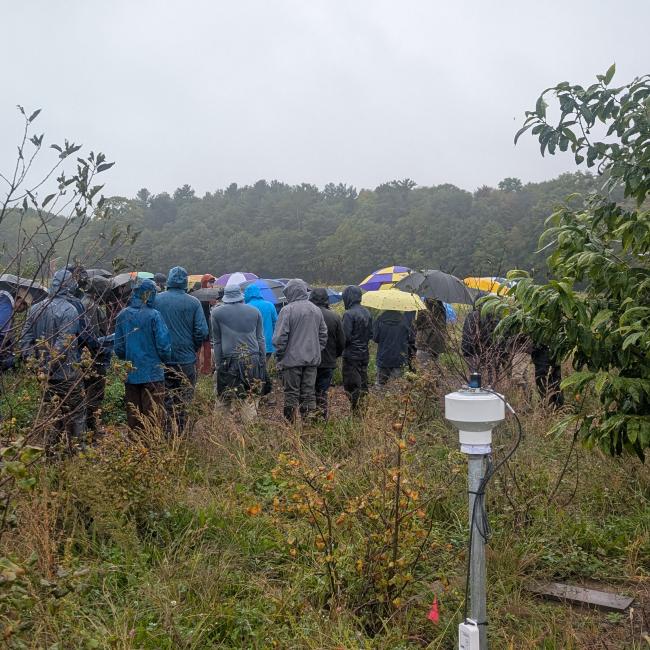
One of the highlights of the season was the opportunity to learn together through twilight meetings, field tours, and on-farm conversations. These gatherings brought farmers, researchers, educators, technical assistance providers, and community partners into the same landscapes to share questions, experiences, and ideas. They reminded us that agroforestry advances through both science and relationships.

We are deeply grateful to the cooperators, educators, researchers, students, and readers who have contributed their time, expertise, and enthusiasm to this work. The projects featured in these pages are rooted in a shared commitment to long-term stewardship and the belief that healthy farms and healthy ecosystems can support one another.

As the field season transitions into winter, our attention turns to data analysis, research findings, winter management, and planning for the 2027 season. Those topics will be the focus of our Winter Solstice issue.

For now, we invite you to spend some time with the observations, lessons, and questions gathered here. Like the young trees at the heart of many of these projects, the knowledge emerging from this work is still taking root. We look forward to seeing how it grows.

The ADAPT Team

UNH agroforestry staff walking outdoors during their offsite

All-Hands Meeting

The ADAPT team came together to share project updates, discuss agroforestry initiatives, and strengthen collaboration among partners.

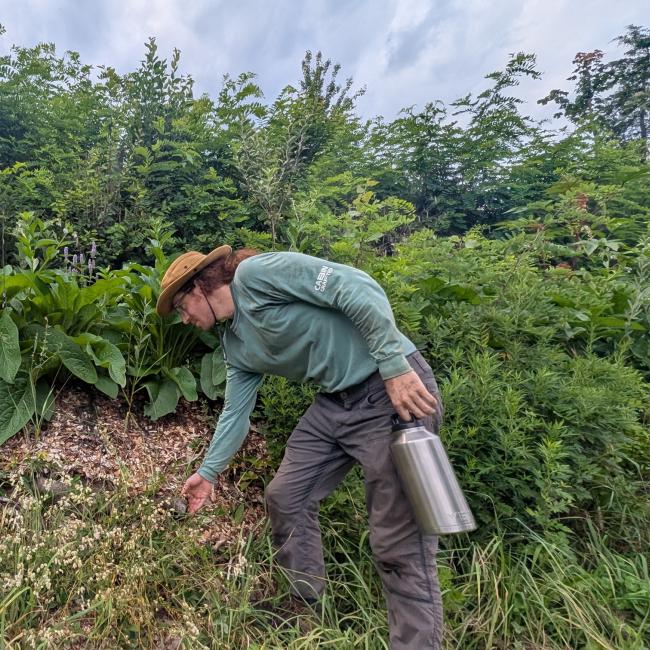
A man in a wide-brimmed hat and green long-sleeve shirt, carrying a large steel water bottle, bends to reach into tall grasses beside a wood chip mulched bed. The bed is ringed with large-leaved comfrey and purple flower spikes, backed by a dense wall of trees and shrubs.

Practitioner Profiles

Explore agroforestry practices at Black Creek Farm & Nursery, where diverse perennial crops and sustainable land management support resilient agricultural systems.

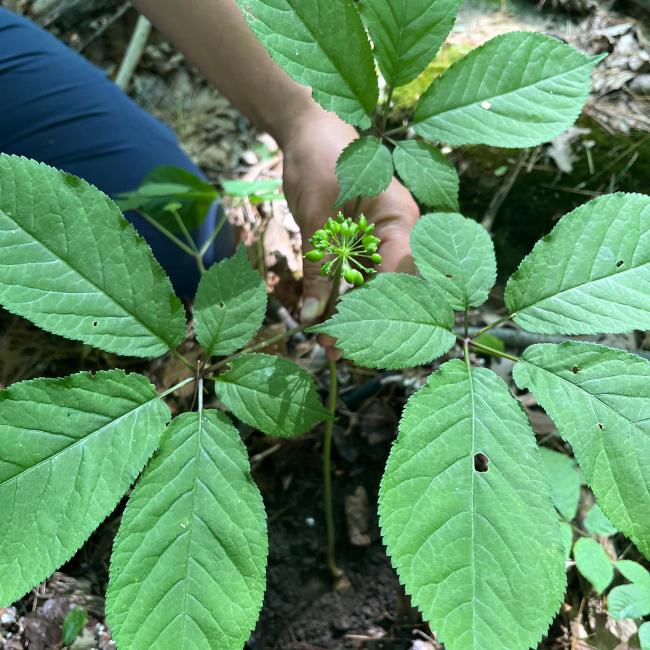
Looking down on an American ginseng plant growing from leaf litter and pine needles on the forest floor. A person kneeling beside it holds up a cluster of green berries above three leaves, each with five toothed leaflets.

The Research Grove

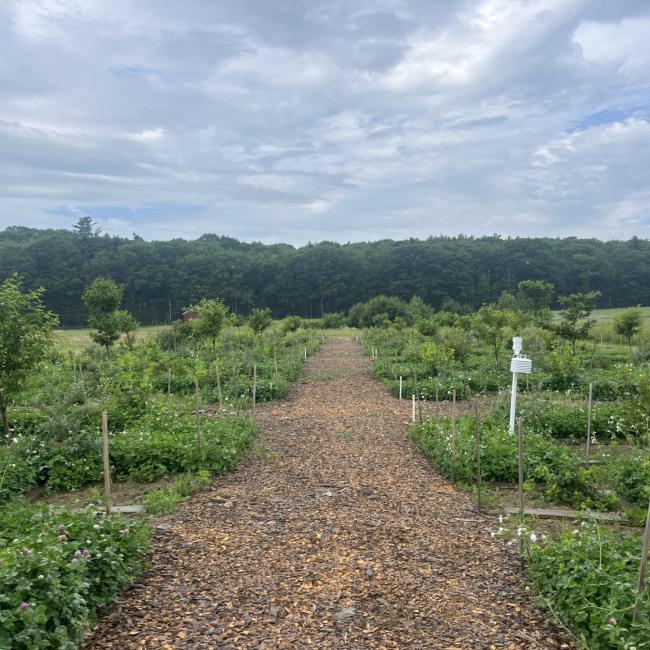
A wood chip path runs between rows of research plots planted with young trees, shrubs and flowering clover, marked with wooden stakes. A white weather sensor station stands beside the path, with a forest line under a cloudy sky.

Technical Assistance & Peer Networking

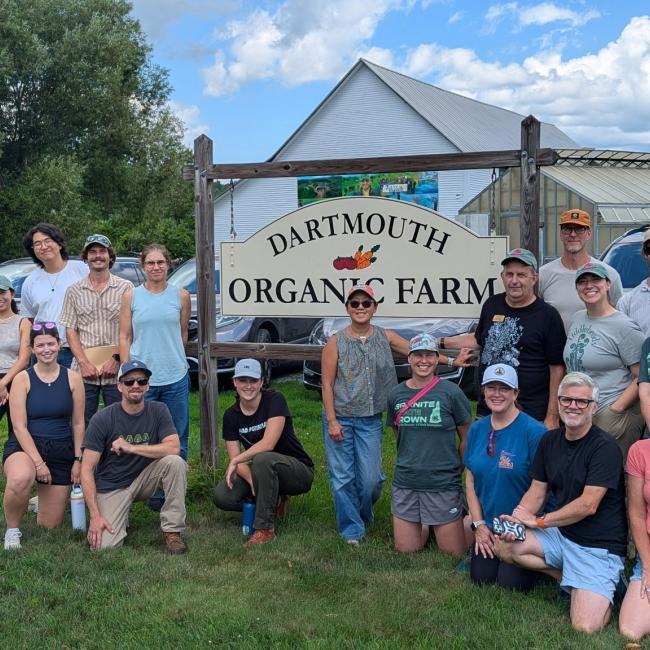
A group of about two dozen people pose on the grass around the Dartmouth Organic Farm sign, some standing and some kneeling in front. Several wear matching green Granite State Grown shirts. Behind them are a wooden barn with solar panels on the roof, a white barn, a greenhouse and parked cars under a partly cloudy sky.

Learning Landscape

Funding

01
Connecticut River Watershed Farmers Alliance (CRWFA)
Open icon icon to open the summary

Connecticut River Watershed Farmers Alliance (CRWFA)

Connecticut River Watershed Farmers Alliance (CRWFA) maintains a curated grant and funding calendar for Northeast agroforesters. Their page aggregates federal, state, nonprofit, and private funding opportunities, along with application deadlines and links to apply. Funding opportunities cover soil health, regenerative production, climate resilience, perennial systems, market development, and on-farm research. 

02
Agroforestry Coalition Nursery Regional Network Mini-Grants
Open icon icon to open the summary

Agroforestry Coalition Nursery Regional Network Mini-Grants

Deadline: November 6, 2026. Amount: Up to $3,000. Open to U.S.-based nurseries growing or distributing plant material for agroforestry. Lead applicants must coordinate with at least three participating nurseries, all listed in the Agroforestry Nurseries Directory. Funding supports in-person regional gatherings and cooperative activities among nurseries. For more information

03
Vermont Working Lands Enterprise Initiative (WLEI)
Open icon icon to open the summary

Vermont Working Lands Enterprise Initiative (WLEI)

Vermont Working Lands Enterprise Initiative (WLEI) has several funding opportunities available for farm, forest, and local food businesses, as well as the organizations that support them.

Informational webinars are offered at the start of each application period. For more information, visit the Working Lands Enterprise Initiative website or contact working.lands@vermont.gov or 802-917-2637.

04
Opportunities for Vermont Dairy Producers
Open icon icon to open the summary

Opportunities for Vermont Dairy Producers

Join the UVM Extension Dairy Team and partners to learn about funding opportunities available to Vermont dairy producers. Experts will share strategies and resources to help you navigate the grant application process. Connect with representatives from relevant funding organizations and get answers to your project-specific questions. All events will all cover the same content, so register for the most convenient location.

  • Tuesday, November 3, 10 AM – 12 PM at People’s Trust Company, St. Albans, VT 
  • Thursday, November 5, 10 AM – 12 PM at Middlebury Extension, Middlebury, VT 
  • Tuesday, November 10, 10 AM – 12 PM at Billings Farm, Woodstock, VT 
  • Thursday, November 12, 10 AM – 12 PM at Poulin Grain, Derby, VT 

This series is supported by the Northeast Extension through USDA, National Institute of Food and Agriculture. For additional information, contact Whitney Hull (802-656-7563), Kelsie Bram (802-656-4829), or Amber Blodgett (802-355-2653). For disability-related accommodations contact UVM Student Accessibility Services (802-656-7753).

05
FARMpreneurs Strategic Sprint
Open icon icon to open the summary

FARMpreneurs Strategic Sprint

FARMpreneurs Strategic Sprint is a free, week-long executive education program for regenerative farmers who want to strengthen the profitability, resilience, and long-term impact of their businesses. Participants develop a three- to five-year strategic plan, build leadership and entrepreneurial skills, and leave with a customized "strategic playbook" outlining their farm's mission, goals, and growth strategy. The program emphasizes peer learning, mentorship, and practical business planning rather than production agriculture training. Farmers are responsible only for travel costs if selected. 

Current application period: Applications are being accepted for the Fall 2027 (October-December) and Winter 2028 (January-March) Strategic Sprint cohorts. Learn more and apply through FARMpreneurs. 
Events

01
Rhode Island Tree Farm Program presents: Agroforestry in New England: Growing Trees and Foo
Open icon icon to open the summary

Saturday, October 24, 2026, 10 am to noon at Wild Harmony Farm, 366 Victory Highway, Exeter, Rhode Island. View a recent harvest area where land is being prepared for silvopasture in conjunction with the ADAPT Project. Visit additional areas under silvopasture for several years and learn how you can grow trees for high quality wood products and quality livestock on the same acreage. Free event, no registration needed. For more information, visit Rhode Island Tree Farm Program.

02
Co-Creating the Future of Food: How Food Policy Councils Can Drive Inclusive Planning
Open icon icon to open the summary

November 19, 2026 at 3 pm, online. Join food system leaders, community organizers, policymakers, and advocates for Co-Creating the Future of Food: How Food Policy Councils Can Drive Inclusive Planning. This webinar will explore how food policy councils can foster inclusive community engagement, strengthen local food systems, and help shape more equitable and resilient food futures. Participants will learn how collaborative planning processes can bring diverse voices to the table, build stronger partnerships, and support community-led food system solutions. Whether you are involved in food policy, agriculture, public health, economic development, or community organizing, this session offers valuable insights and practical examples for advancing local and regional food system goals. Learn more and register.

Seasonal Recipes: Fall Harvest Edition

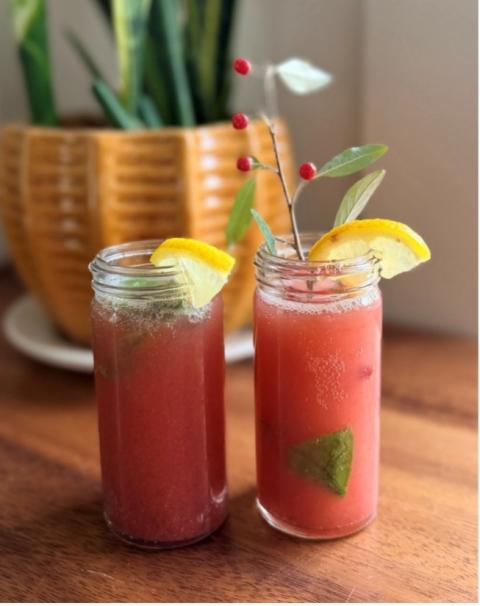
This summer, we challenged readers to test and submit their recipes using invasive species in the New England landscape. For this issue, here is one adapted from edible Southeastern Massachusetts.

Autumn Olive Simple Syrup

Autumn Olive Simple Syrup

Image credit: Natasha Meehan, Cornucopia Project

This invasive shrub’s ruby-red berries have a bright, sweet-tart flavor that shines in simple recipes. This easy syrup captures the taste of the season and can be drizzled over pancakes, stirred into sparkling water, spooned onto yogurt, or used anywhere you'd enjoy a fruity touch of fall.

A shrub made with autumn olive simple syrup combines the sweet-tart flavor of ripe autumn olive berries with the crisp acidity of a drinking vinegar, along with notes of tart cherry, cranberry, pomegranate, and red currant. Mixed with sparkling water, the shrub becomes lightly effervescent, with a crisp finish; fruity, tart, and earthy, reflecting the wild character of foraged autumn olives.

01
Ingredients:
Open icon icon to open the summary
  • Autumn olive berries
  • Water
  • Sugar
02
Instructions:
Open icon icon to open the summary
  1. Place cleaned autumn olive berries in a non-reactive pot and cover with about 1 inch of water.
  2. Bring to a boil, then reduce heat and simmer for about 30 minutes.
  3. Mash the berries and press through a sieve or food mill to remove skins and seeds.
  4. Measure the resulting pulp.
  5. For every 1 cup of pulp, add ⅓ cup sugar.
  6. Return to low heat and simmer, stirring occasionally, until reduced to a syrupy consistency.
Chestnut and Apple Soup

Image credit: Lisofskaya

Recipe source: www.thatsnerdalicious.com

Chestnut and Apple Soup

Prep time: 20 minutes. Cook time: 30 minutes. Total time: 50 minutes. Servings: 4.

Tips:

  • For an even deeper, nuttier flavor, consider roasting the chestnuts before peeling. Score an “X” on the flat side of each chestnut and roast them at 400°F (200°C) for 20-30 minutes, or until the shells split open. 
  • After roasting or boiling, immediately plunge the chestnuts into ice water for a few minutes to loosen the skins.
  • The soup base (before adding the cream) can be made a day or two in advance. Store it in an airtight container in the refrigerator and reheat before serving. Add the cream just before serving.
  • Granny Smith apples provide a nice tartness, but feel free to experiment with other apple varieties for a sweeter soup. Try adding a splash of dry sherry or apple cider vinegar for a more complex flavor profile. A pinch of nutmeg or cinnamon can also add a warm, festive touch.
01
Ingredients:
Open icon icon to open the summary
  • 1-1/2 pounds (about 5-1/4 cups) whole chestnuts, peeled and skinned
  • 2 celery stalks roughly chopped
  • 5 cups chicken or vegetable stock 
  • 2 medium apples peeled, cored and chopped
  • 4 Tablespoons butter (or non-dairy substitute)
  • Salt and pepper to taste
  • 10 Tablespoons cream (or non-dairy substitute)
02
Instructions:
Open icon icon to open the summary
  1. In a large saucepan, combine the peeled chestnuts, chopped celery, and chicken stock. Bring the mixture to a boil over high heat, then reduce the heat to medium and cook for 20 minutes, or until the chestnuts are tender.
  2. While the chestnuts are cooking, melt the butter in a frying pan over medium heat. Add the chopped apples and cook, stirring occasionally, until the apples have softened – about 5-7 minutes. Season with salt and pepper.
  3. Once the chestnuts are cooked, use a slotted spoon to remove them and the celery from the saucepan, reserving the stock. Transfer the cooked chestnuts and celery to a food processor or blender, along with the cooked apples.
  4. Process or blend the mixture until it forms a smooth purée. Be careful when blending hot liquids; vent the blender lid to prevent pressure buildup.
  5. Return the purée to the saucepan with the reserved stock. Mix well to combine over medium heat. Simmer gently for another 5 minutes to allow the flavors to meld.
  6. To serve, remove the pan from the heat. Stir in the single cream (or non-dairy alternative). Adjust the seasoning with salt and pepper to taste. Mix well to ensure the cream is evenly distributed.

Photo Synthesis: Reader-Submitted Images

For our Winter Solstice issue, we're looking to celebrate the beauty, creativity, and abundance of working trees and forest-based enterprises. Think “agroforestry through the seasons” – the many products agroforestry systems provide, from handcrafted bowls, spoons, baskets, and woodcrafts to syrups, botanicals, mushrooms, and other forest-grown treasures. Send submissions to agroforestry@unh.edu. 

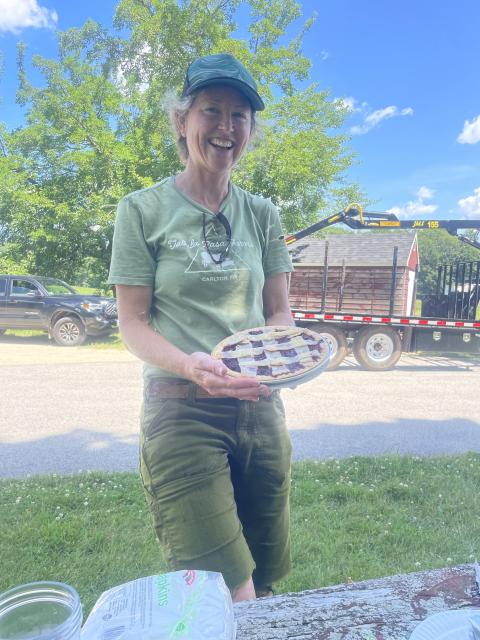
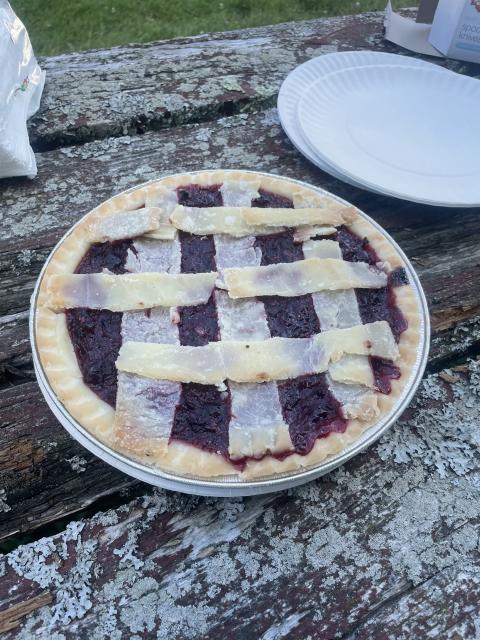
Person holding a jostaberry pie
Image of a jostaberry pie

UNH Land, Water, and Life Acknowledgement

As we all journey on the trail of life, we wish to acknowledge the spiritual and physical connection the Pennacook, Abenaki, and Wabanaki Peoples have maintained to N’dakinna (homeland) and the aki (land), nebi (water), olakwika (flora), and awaasak (fauna) which the University of New Hampshire community is honored to steward today. We also acknowledge the hardships they continue to endure after the loss of unceded homelands and champion the university’s responsibility to foster relationships and opportunities that strengthen the well-being of the Indigenous People who carry forward the traditions of their ancestors.

Published
June 22, 2026
Topics