
The Research Grove: The New England Agroforester - Fall Equinox 2026
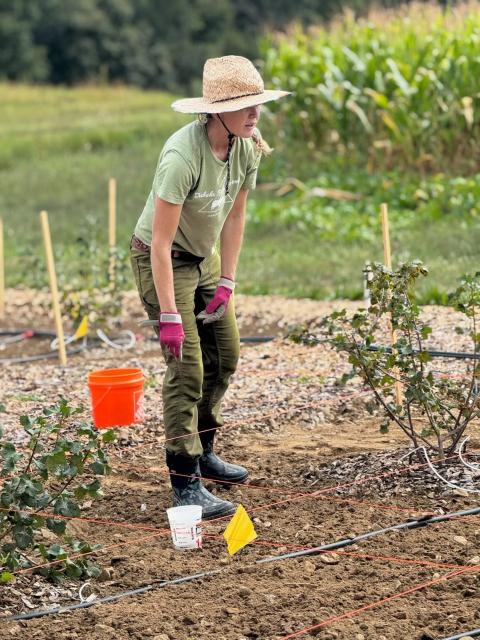
Laurie Mooney: Advancing Food Forest Research at Kingman Farm
This summer marked the first full season of data collection for UNH researcher Laurie Mooney's food forest study at the University of New Hampshire’s Kingman Farm. The project is examining how relationships among species, soil conditions, and nutrient cycling influence the health and function of food forest systems over time.
Much of the season was devoted to establishing research protocols and collecting baseline data. Mooney and her team conducted soil sampling, herbaceous vegetation surveys, and biweekly soil moisture monitoring throughout the site. They collected both soil chemistry samples and larger soil cores for bulk density analysis, creating a foundation for future comparisons as the food forest matures.
As fieldwork continues into the fall, the project is expanding to include observations of insects, pest and pathogen pressure, and overall plant health. One question of particular interest is whether plants growing near nitrogen-fixing species show measurable differences in vigor or performance. While it is still too early to draw conclusions, the season's data will be organized and analyzed over the coming months.
"We're really in that first stage of building the dataset," Mooney said. "This summer was focused on establishing strong protocols, collecting data, keeping everything organized, and digitizing records whenever we had the chance."
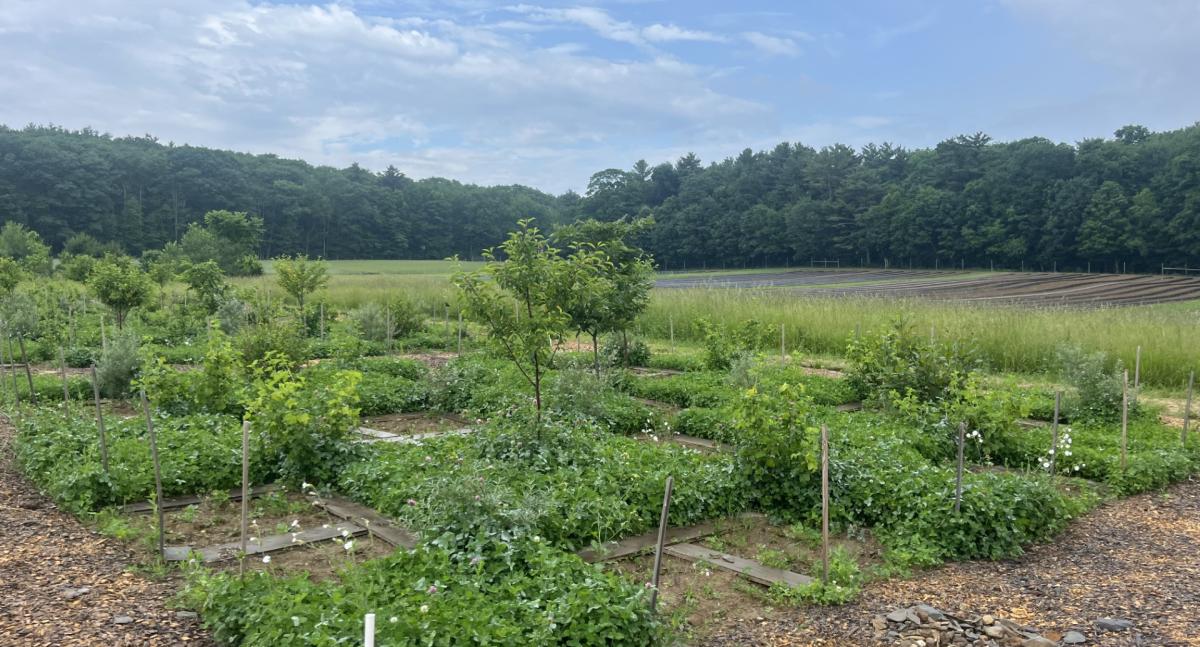
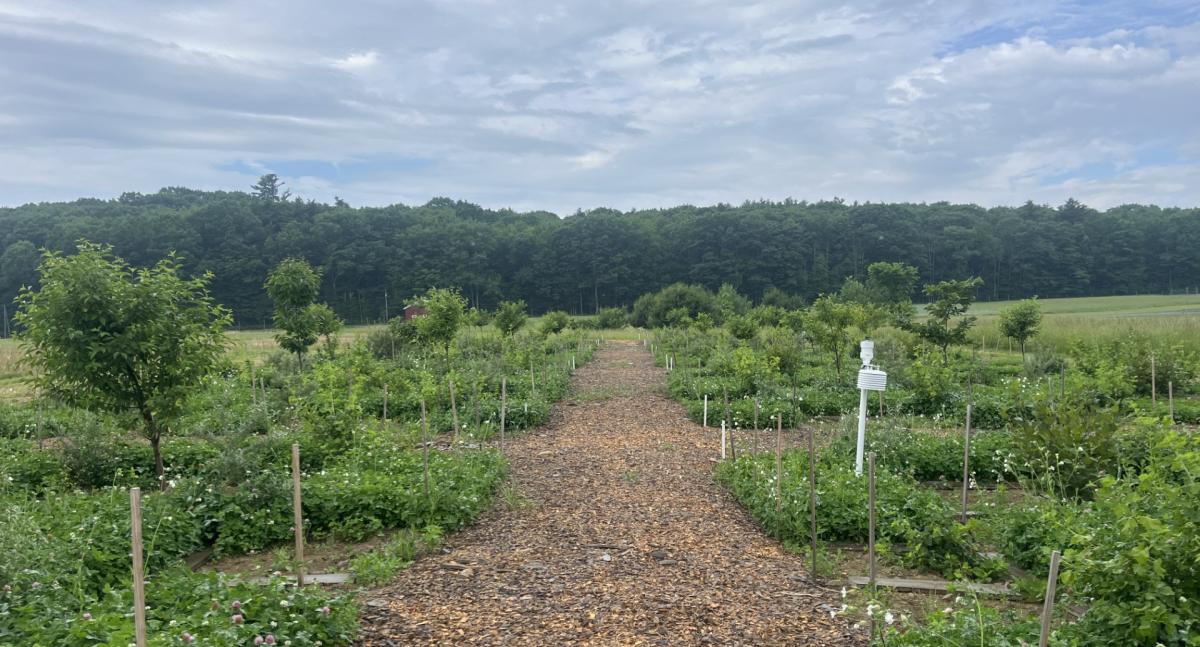
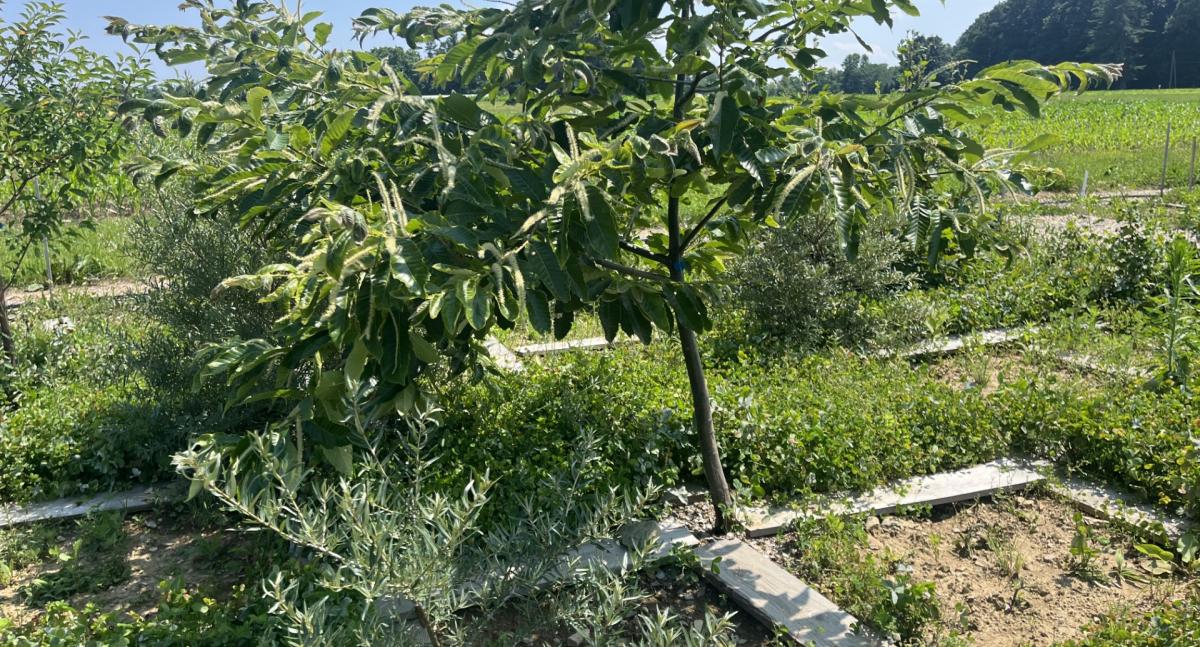
The work itself has been as hands-on as many agricultural operations. Coming from a farming background, Mooney notes that much of her time is spent outdoors collecting samples and taking measurements. At the food forest, however, that work includes tracking ecological variables such as soils, vegetation, insects, and nutrient dynamics.
This fall, the project is adding another component by measuring nitrogen mineralization using ion exchange strips placed directly in the soil. The strips provide a time-integrated measure of nitrogen availability and release rates, helping researchers assess how nutrients move through the system over the course of the growing season.
Although the project is still in its early stages, monitoring of pests and pathogens may provide some of the first results available for analysis. Over time, the research will assess how food forest design influences soil health, nutrient cycling, plant health, and resilience.
The work is also expanding beyond Kingman Farm. Mooney is developing a research project at Burley Farm in Epping, NH, in partnership with the Southeast Land Trust of New Hampshire (SELT). The new site will build on lessons learned during the Kingman Farm study and create opportunities to compare food forest establishment and management across different locations.
As the field season winds down, attention will turn toward data analysis. The findings will contribute to a growing body of research on agroforestry and perennial food production systems in New Hampshire, helping practitioners make more informed decisions about food forest design and management.
Rethinking Ginseng Harvest Regulations
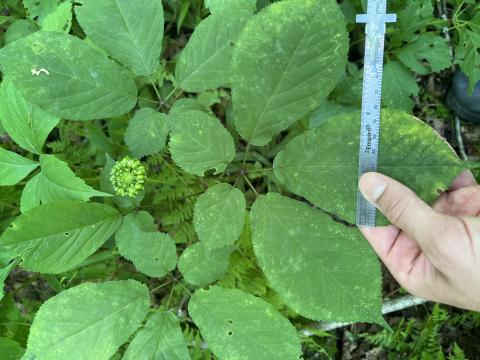
Caption: Karam Sheban records growth and site conditions of wild American ginseng, helping track the productivity of this valuable understory species in a managed woodland.
A new study by UNH ADAPT Agroforestry researcher agroforestry researcher Karam Sheban, published in Environmental Research Letters, raises important questions about whether current regulations governing American ginseng harvest are effectively supporting conservation goals. The paper emerged from Karam’s doctoral dissertation research at Yale and uses field data from hundreds of ginseng plants to evaluate the biological assumptions behind existing harvest rules.
Under current federal regulations, wild American ginseng can be harvested when plants are at least five years old and have three leaves. These standards were designed to ensure plants have had an opportunity to reproduce before harvest. However, Karam and colleagues found that age is a surprisingly poor predictor of the traits that matter most for conservation, including root size and seed production. By contrast, plant size was a much stronger indicator of both reproductive capacity and root development.
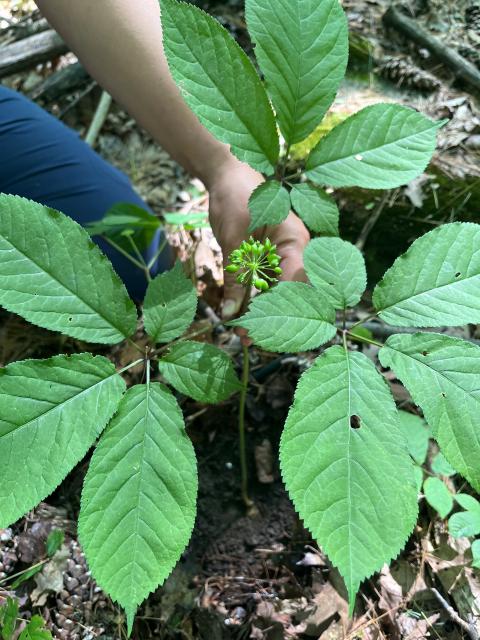
The findings suggest that current regulations may be misaligned with the biology of the species. According to the research team, size-based criteria would better identify plants capable of sustaining wild populations while also providing a simpler and more enforceable framework for harvest management.
In addition, the study highlights an important challenge for forest farmers: current rules may unintentionally penalize forest farmers who contribute to conservation by producing ginseng in managed forest settings. They suggest revising the regulatory approach to distinguish more clearly between wild-harvested and cultivated plants and shift conservation oversight toward size thresholds that are biologically meaningful.
The study exemplifies the role of science informing effective conservation policy. As interest in forest farming grows across the Northeast, the findings underscore the importance of aligning regulations with ecological realities while supporting growers who are helping conserve valuable forest botanicals.
Technician Spotlight
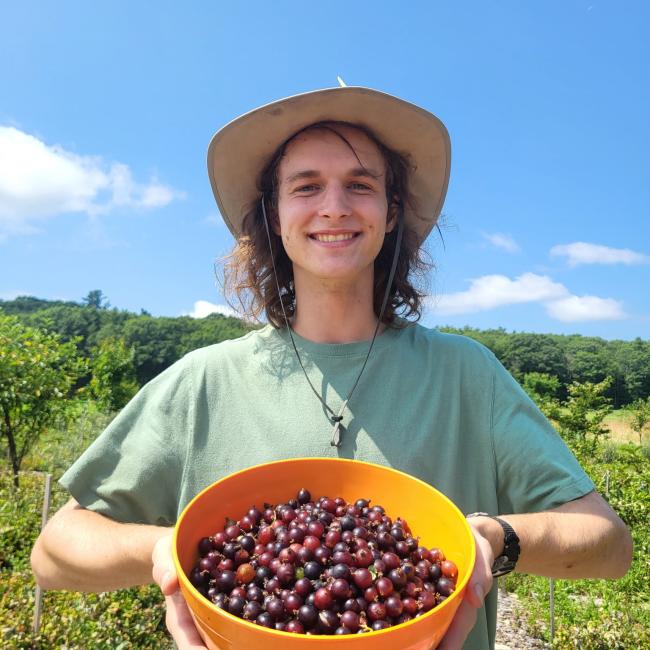
Christian Filteau, Technician
Lorem ipsum dolor sit amet, consectetur adipiscing elit, sed do eiusmod tempor incididunt ut labore et dolore magna aliqua. Ut enim ad minim veniam, quis nostrud exercitation ullamco laboris nisi ut aliquip ex ea commodo consequat. Duis aute irure dolor in reprehenderit in voluptate velit esse cillum dolore eu fugiat nulla pariatur. Excepteur sint occaecat cupidatat non proident, sunt in culpa qui officia deserunt mollit anim id est laborum.
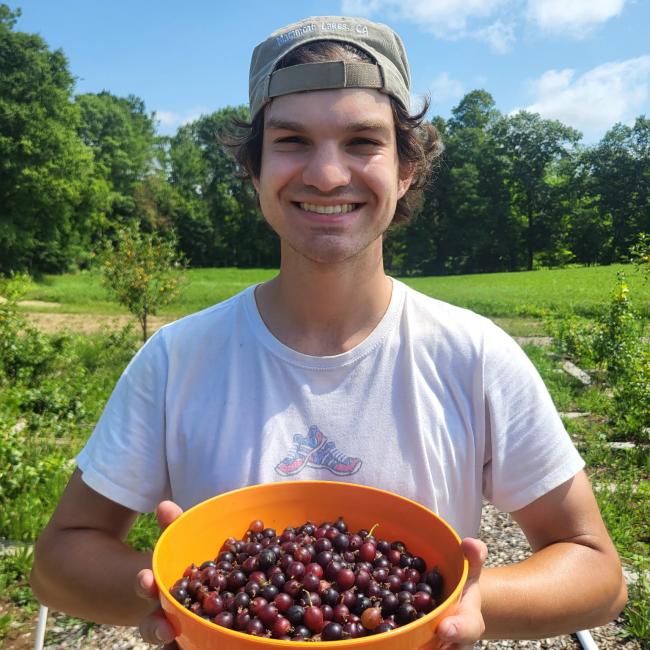
Jake Williams, Student Technician
Lorem ipsum dolor sit amet, consectetur adipiscing elit, sed do eiusmod tempor incididunt ut labore et dolore magna aliqua. Ut enim ad minim veniam, quis nostrud exercitation ullamco laboris nisi ut aliquip ex ea commodo consequat. Duis aute irure dolor in reprehenderit in voluptate velit esse cillum dolore eu fugiat nulla pariatur. Excepteur sint occaecat cupidatat non proident, sunt in culpa qui officia deserunt mollit anim id est laborum.
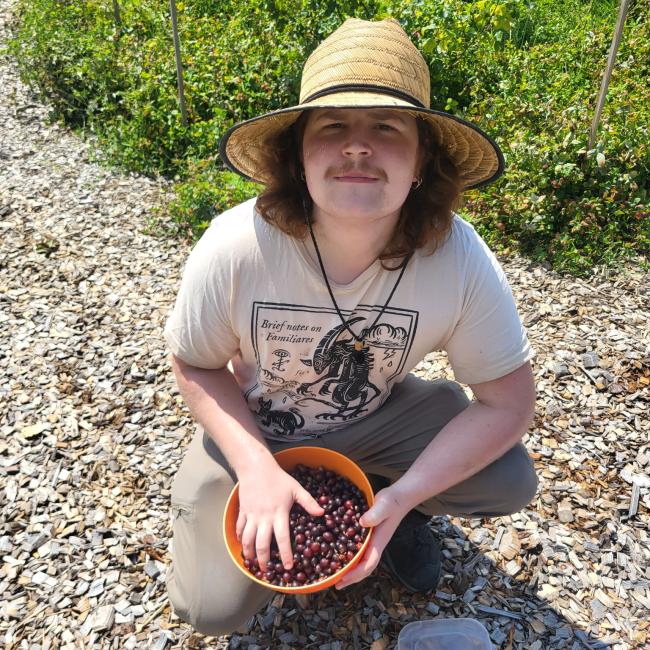
Elijah Tetreault, Student Technician
Lorem ipsum dolor sit amet, consectetur adipiscing elit, sed do eiusmod tempor incididunt ut labore et dolore magna aliqua. Ut enim ad minim veniam, quis nostrud exercitation ullamco laboris nisi ut aliquip ex ea commodo consequat. Duis aute irure dolor in reprehenderit in voluptate velit esse cillum dolore eu fugiat nulla pariatur. Excepteur sint occaecat cupidatat non proident, sunt in culpa qui officia deserunt mollit anim id est laborum.
Within Adaptive Agroforestry Principles and Teaching (ADAPT), Technicians support the day-to-day implementation of the project’s agroforestry research, education, and outreach efforts. Their work includes establishing and maintaining research sites, collecting field and environmental data, processing soil and plant samples, maintaining equipment, assisting with on-farm trials, and supporting field days, workshops, and other educational programs.
Here, Christian Filteau, Jake Williams, and Elijah Tetreault share the harvest while collecting yield measurements at the UNH Food Forest.