
Walking Through Agroforestry at Black Creek Farm & Nursery
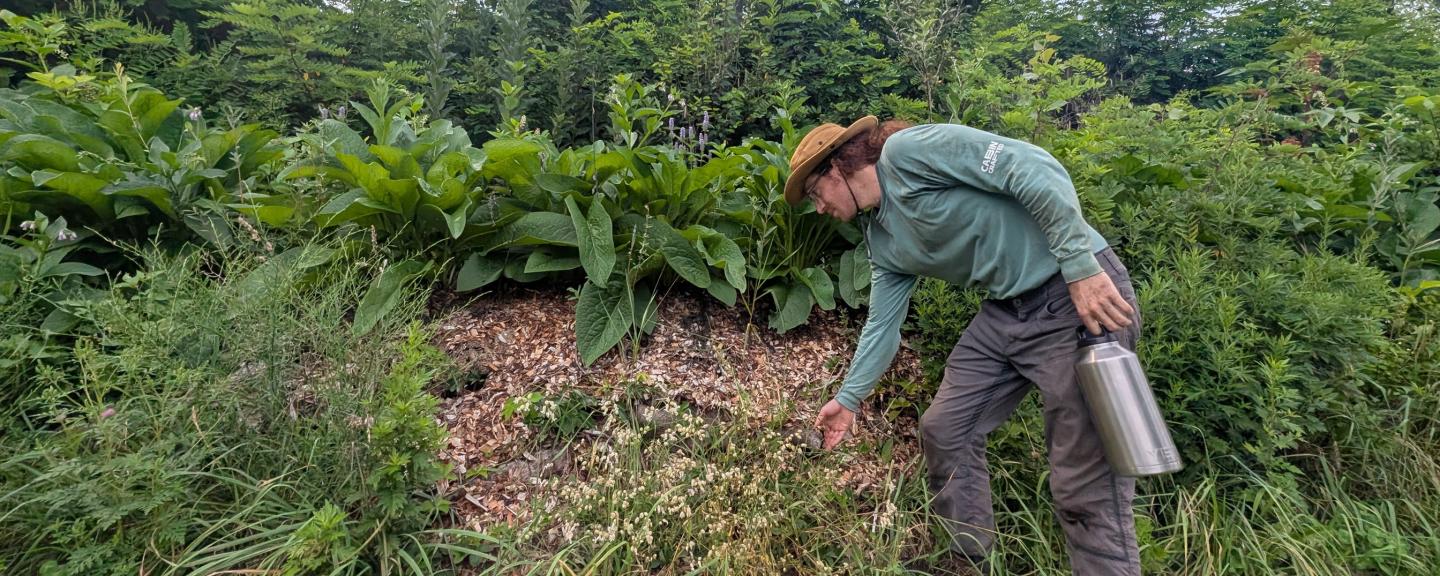
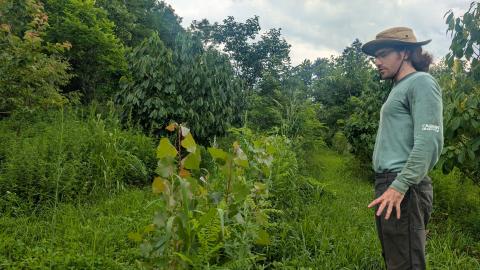
Jonathan Dean points out the beds supporting vegetation in a forest clearing. While recycling nutrients and building soil, the beds support ground cover, broad-leaf medicinal plants like comfrey, fruiting shrubs, and nut trees.
In the dwindling days of late summer, I met up with fellow agroforestry enthusiast Jonathan Dean at Black Creek Farm & Nursery in Highland, New York. I’d had the good fortune to be introduced to Jonathan at a cohousing tour earlier this year, and since then, have been getting to know him as a community-builder and the creator of Touch Soil, a storytelling platform focused on regenerative agriculture, land stewardship, and community resilience.
On this day, Jonathan offered me a firsthand look at his agroforestry practice here in the Mahicantuck (Hudson) Valley. What began as a desire to plant more food-bearing and useful perennial species has grown into a diversified farm producing vegetables, tree fruits, berries, and nursery stock, that also serves as a regional resource for agroforestry learning and experimentation. Black Creek Farm is owned and managed by Eric Schellenberg, who propagates food and medicinal crops, teaches about agroforestry, and offers consulting services for resilient ecological design.
During the tour, I was increasingly impressed by the patience and long-term vision behind the work. The nursery was established to support the creation of a large-scale food forest and continues to focus on species that are adapted to northeast landscapes, like chestnuts, hazelnuts, persimmons, walnuts, seaberry, and other fruit, nut, and medicinal plants used in agroforestry systems. What stood out most was the consistency with which holistic agroforestry principles shaped decisions across the site, from species selection to long-term planning.
As Jonathan guided me through areas of the farm, our conversation moved from soil health and site selection to the many functions trees serve on the farm: producing food, improving soil biodiversity, moderating climate impacts, and creating new opportunities to learn and partner with communities. The farm, its practices, and its history were a tangible expression of a worldview shaped by relationships, movement, and the understanding that healthy landscapes depend on interconnected systems. To me, these principles are embodied by the Lenape name for the valley, Mahicantuck, "the river that flows both ways.”
Black Creek Farm & Nursery also plays an active role in regional agroforestry education. As a host site in Cornell Cooperative Extension’s agroforestry field day series, the farm has focused on helping farmers to incorporate edible tree crops into working landscapes. For those interested in perennial agriculture, food forests, silvopasture, or climate-resilient farming systems, the farm inspires the imagination as it demonstrates what’s possible when food production and ecological restoration are pursued together.
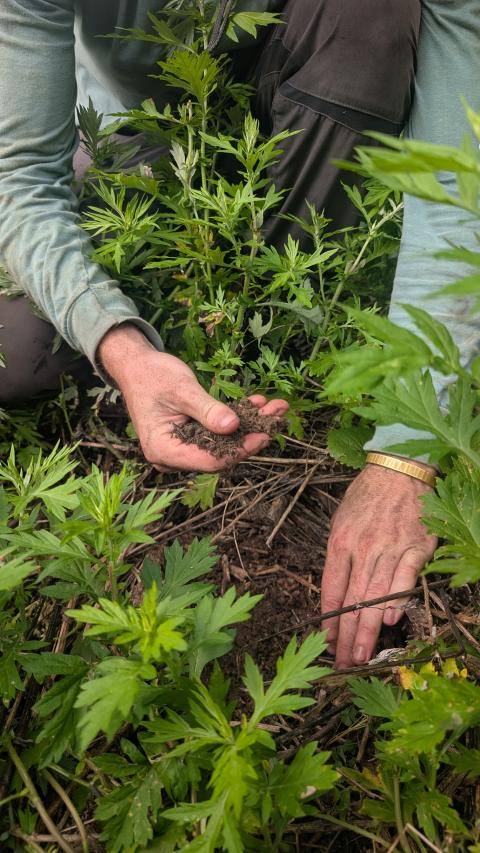
My strongest impression from the tour was the sense of care embedded in the work. The farm's approach avoids heavy external inputs and emphasizes stewardship, patience, and observation. Fertility comes primarily from compost, cover crops, and biological processes; nursery stock is grown on-site; and management practices prioritize soil health and ecological function. Our discussion frequently returned to relationships: between trees and crops, people and place, present decisions and future generations.
Jonathan Dean is an agroforester, writer, and regenerative agriculture practitioner working at the intersection of food production and ecosystem restoration. Through his work with Black Creek Farm & Nursery and Wellspring Forest Farm, he helps design and steward agroforestry systems that integrate trees, livestock, and food production while building healthier soils and more resilient landscapes. For more of Jonathan’s work visit Jonathan-Dean.com.