
Bit by Grit
If you were building a team to design a light switch for someone with disability, you’d probably include an electrical engineer. Is that all, though? You might also need someone who could understand the user’s specific needs, a mechanical engineer to design the moving parts, an industrial engineer to choose materials, and someone who could keep the team working efficiently.
“There are so many different roles,” says Claes Thelemarck, UNH Extension 4-H educator, as he spoke to a group of more than 100 teen participants in the inaugural Grit to Grow Summit held in June in Meredith, New Hampshire.
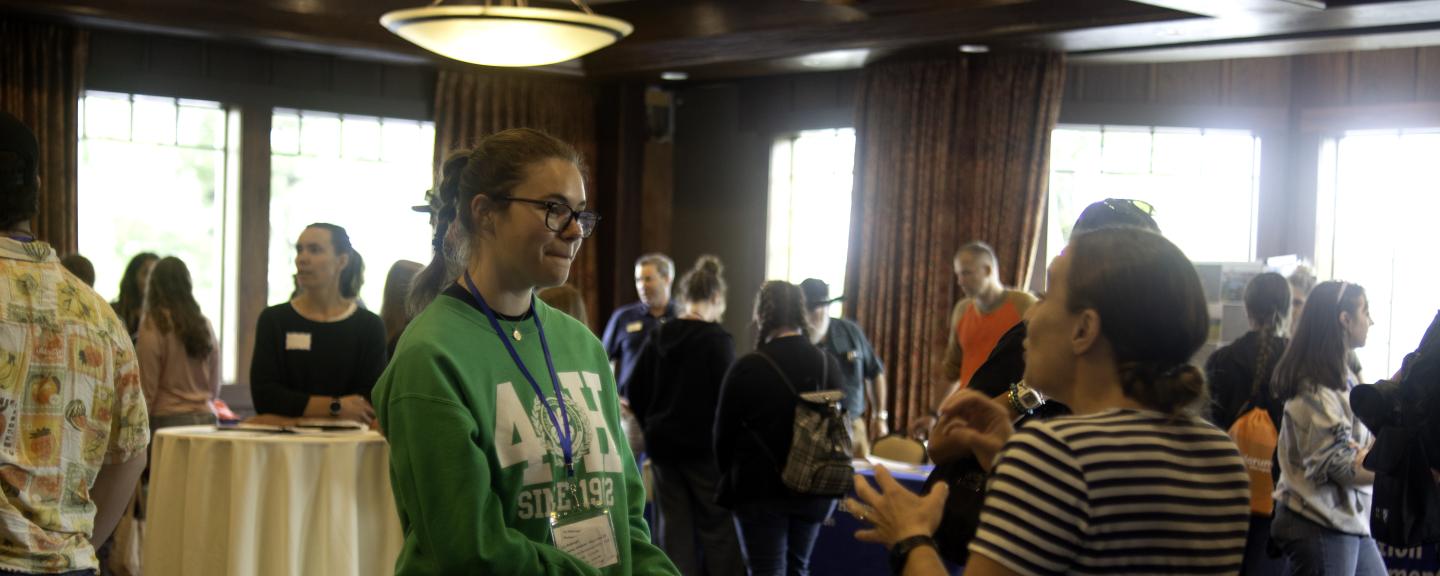
The summit, designed by UNH Extension 4-H and the UNH Extension Grit to Grow Collaborative, gave teenagers a chance to meet face-to-face with people who represent a wide range of industries and who would love to welcome such young collaborators and problem solvers into their field.
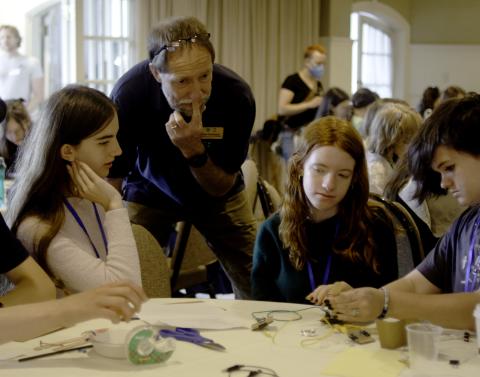
As an exercise to kick off the summit’s second day, Thelemarck challenged small groups of attendees to think of a reason why a person might have trouble using a conventional light switch and then build one that the person could operate.
One group made a switch that could be operated by foot. Another group designed a button that could be pressed by any body part. Yet another group used braille to designate the switch’s positions. Each group found their own path to a solution, and each group member found a way to lend their unique talents.

The light switch problem is small in comparison to the challenge facing each of the teenagers attending the summit. They all need to figure out how to navigate the end of their high school years and the beginning of whatever comes next. The Grit to Grow Summit was designed to help them chart such a course.
Organizers designed the event to address an information and access gap that many young people deal with. They are thinking about their post-high school plans but don’t have enough practical knowledge to build a plan, particularly if they don’t want to immediately enroll into post-secondary school. The first day of the summit featured several workshops, ranging from identity to decision-making and personal finance, and the second day cycled participants through the Church Landing Conference Center in Meredith, where they could pepper prospective employers with questions.
The Kids Have Grit
Alex Cousino, a student at Kearsarge High School in North Sutton, developed a strong interest in robotics through his local 4-H club. This summer, he’s been restoring a ’72 Chevelle. So, Cousino was all ears when he approached the display for Draxle, a company that offers remote auto repairs and services.
“They were talking about how I could earn money by fixing other people’s cars,” Cousino says, “and that would go wonderfully with what I’m hoping to do, which is own a garage.”
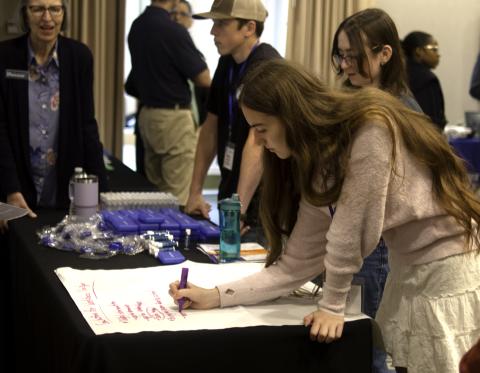
A junior from Manchester, Katalina Hoxaj plans on following in her father’s footsteps as a property developer. She found plenty at the summit to lend definition to her vision of her future.
Hoxaj gained valuable insight from people working in agriculture, banking, and others, noting that she was very glad to have "in-depth, one-on-one conversations with people working in these industries” during the summit.
“And I also got offered a job internship, running social media for the NH Timberland Owners Association,” she reports.
Never Stop Asking
While the event was designed to serve young people, the employers and educational institutions who participated all reported value in the summit.
Rudy Glocker, founder of the apparel company Burgeon Outdoors in Lincoln, New Hampshire, was one of the many employers who came with the hopes of connecting with the next generation of employees. He says that he wanted to tell attendees about the opportunities in their home state.
“We want to raise awareness that we are offering a skilled job here in the White Mountains,” Glocker says. Burgeon makes its clothing at either its Lincoln or Gorham locations and is willing to hire “novices” and develop their skills. “There’s a high demand for our products and we need more people making them.”
The interactivity of the event, in which groups of attendees worked with employers to discuss the challenge of plotting a career path in 2026, was one of the most valuable to Becky Marden, a nurse and career coach who works as the director for workforce development at Elliot Hospital.
“For me, it’s all about hearing from the students themselves,” says Marden. “During these interactive sessions, they ask great questions, and their answers will actually drive some of the work that we do.”
Marden — like other employers at the summit — observes that the landscape looks different to today’s teenagers than it did for the generation currently in management positions. And it continues to change, Marden adds, emphasizing the need to “Never stop asking…We have to know what (the students) want and what they’re looking for.”
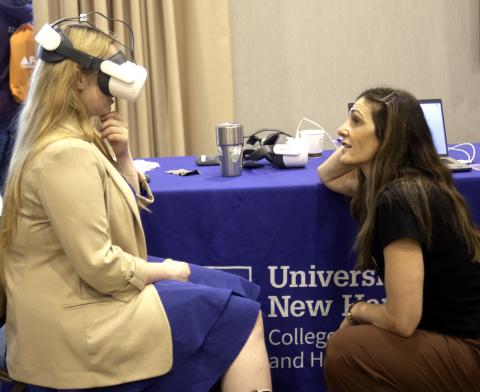
The adults weren’t the only ones doing the asking, according to Doug Cullen, workforce development manager for the New Hampshire Timberland Owners Association. He says that he attended the event to make sure that attendees knew that forestry, and the wide range of careers found within, was an option for them.
“They’re definitely engaging,” Cullen says about the youth in attendance. “What they’re looking for is an opportunity to find people that can actually have conversations with them.”
Confidently Uncertain
Organizers of the summit say they were looking to create an experience in which the next generation of workers could engage with employers, and that it succeeded to the benefit of both groups.
“The event exceeded our expectations,” says Shana Brunye, chief operating officer for Bring Back the Trades, a strong partner who leveraged her network of trades professionals to support the event. She says that industry presenters came away inspired by the young people, particularly by their social intelligence. “The students were encouraging their peers, helping them to think about options for the future, and advocating for trades pathways.”
The interactions with young people brought several of their concerns to the surface, says Daryl Luter, president of the construction management firm Fulcrum Associates.
“I do feel that we collected enough potential program data with the questions and the conversations we all had together during the breakout sessions,” Luter says, “that we should be able to better tailor some of the speaking sessions next year.”
Kate Korbas, the Extension program leader who provides administrative oversight to UNH 4-H efforts and the person who conceived the idea for the summit, says the success of the event is owed to the many who helped turn the concept into reality.
“It was an outstanding demonstration of a true partnership initiative, bringing together partners from the Community College System of NH, NH Career and Technical Education, and of course, industry,” Korbas says. “The greatest comment I heard from a teen was that the experience helped them feel good about not knowing exactly what was next for them but that there were multiple paths they could take with a great deal of support from education, community, and industry leaders.”
That comment echoes Thelemarck’s remarks at the conclusion of his light switch challenge, when he noted that some might know what kind of career they want but many don’t.
“What I do know is that you are all problem solvers,” he announced to the crowd “You’ve shown that to everyone here, that you can collaborate and you can problem solve. And no matter what field you choose to go into, that’s something you can take to the bank.”