
Food for Thought
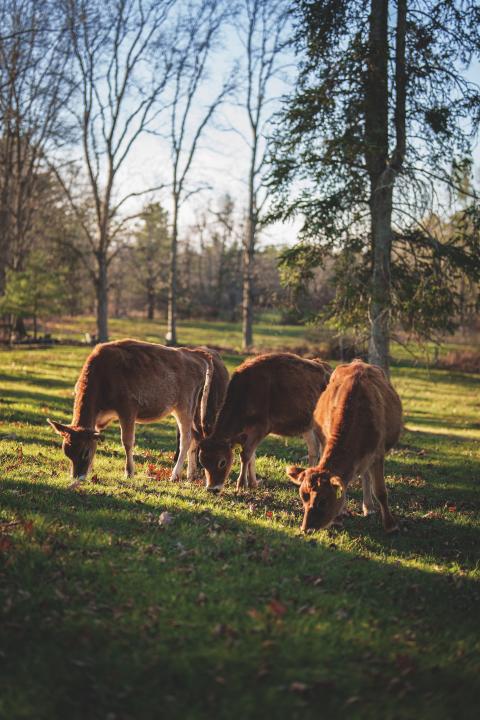
Only 3% of the food eaten in New Hampshire is produced in the state.
Think about it: for every strawberry or tomato you bought at a nearby farmstand or every locally caught or farmed fish purchased, more than 30 are trucked in from elsewhere. Despite the growing demand for local food, land is scarce, the coastline is short, and winter shapes the landscape for the better part of five months.
Overcoming these barriers will improve food security and grow the economy in addition to giving consumers what they want: fresh, delicious local food. Research at UNH is changing how food is produced to meet those demands, providing farmers and growers in New Hampshire and throughout the Northeast with new ways to expand their opportunities — and sales.
Cover(ing) crops
The short growing season limits what can be grown in New Hampshire even during mild years, and early fall or late spring frosts can be devastating. Does it have to be this way?
“Low-tech protected agriculture approaches can significantly lengthen the growing season, as much as a month on either end,” says Becky Sideman, a researcher with the New Hampshire Agricultural Experiment Station (NHAES) and professor of agriculture, nutrition, and food systems at UNH.

Protected agriculture is exactly what it sounds like — shielding plants from not only weather, but pests and diseases as well. Greenhouses are perhaps the most familiar facilities, but they come at a hefty price. Fortunately, small farming and growing operations have more economical alternatives, many developed right at UNH, including simple row covers and high tunnels.
High tunnels, unheated plastic-covered structures, are now familiar sights in the northern countryside, the product of innovative UNH research started in the 1970s. But research on their effective long-term use — for example, how do soil microbes change under cover, and what are the best waysto control pests in warming conditions? — is ongoing.
“High tunnels provide more crop and timing options for farmers and growers,” says Sideman. “Take figs. Few people in the area have had a fresh-picked fig, but we’re able to grow them in Durham using high tunnels. And by using them to stretch the growing season, growers can offer fresh produce at different times, like fall-planted onions in May and early-started tomatoes in June.”
A fish tale, updated
Clam shacks and lobster pounds dot the New England coastline, delighting visitors with regionally themed seafood. But all is not as it appears.
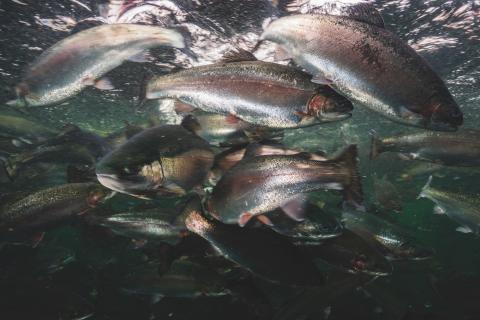
“People on the New England coast see the fishing boats in the harbor and assume that the seafood available in the area is locally caught or grown,” says Linas Kenter, aquaculture and fisheries research scientist with NH Sea Grant and the Center for Sustainable Seafood Systems at UNH. “But when they visit a seafood restaurant, even one near the shore, most menu items will have been imported from abroad.”
Estimates vary, but sources conclude that about 80% of the seafood eaten in the U.S. is imported. Kenter and his colleagues are working to change that.
A key tool in the arsenal is the AquaFort, an offshore aquaculture research and training platform that supports seaweed, shellfish, and finfish farming all within the same structure. A lot of the work is on the engineering side of things — building equipment that will hold up to the harsh marine environment, monitoring environmental effects, assessing the potential for scaling up — but engaging and educating the seafood industry is also a focus.

UNH recently assumed a national leadership role in aquaculture as the leader of the new NOAA Cooperative Institute Fostering Aquaculture Research and Markets (CIFARM).
“The United States has unrivaled infrastructure to be a leader in seafood production with responsible aquaculture,” says David Fredriksson, director of the Center for Sustainable Seafood Systems. “[CIFARM’s] goal is to expand markets, build working waterfront capabilities, and grow an educational structure for seafood economic growth and marine resource stewardship on a national scale.”
Farm meets forest
Traditional farming requires clear land, and a lot of it. In New Hampshire, where about 80% of the small state is covered with forests, agriculture is limited by default.
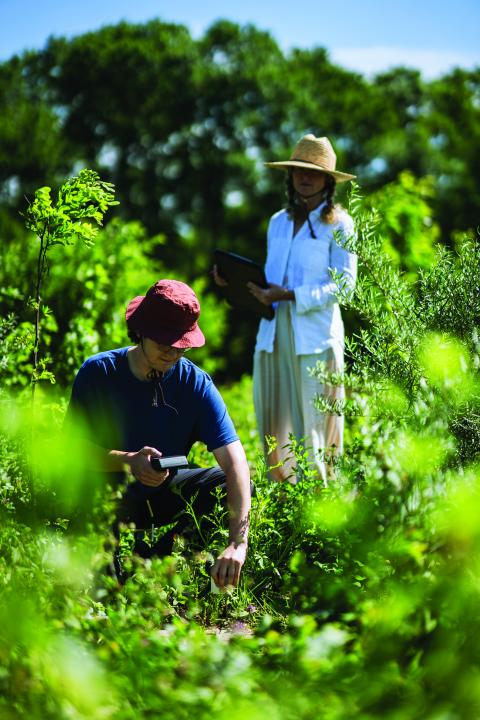
Or can shrubs, trees, and forests be part of our productive farmland?
At UNH’s Kingman Research Farm in Madbury, the Adaptive Agroforestry Principles and Teaching (ADAPT) team is hard at work, both in food forest plots and within the bordering forest itself. Agroforestry is the intentional integration of trees with crops and livestock, expanding agricultural opportunities by embracing, rather than seeking to eliminate or overcome, the trees in the local landscape.
Trees are just beginning to extend above the surrounding vegetation in food forest plots planted at Kingman two years ago. Food forests integrate perennial food production in multiple layers within the same space, typically including herbs and other ground cover plants, shrubs such as berry bushes, and fruit and nut trees of varying heights.
ADAPT is led by NHAES researcher Heidi Asbjornsen, professor in the department of natural resources and the environment, and it is developing and testing agroforestry methods such as food forests, forest farming within more mature forest environments, and silvopasture, providing grazing for livestock in and amongst trees. And while the research effort is the most visible, the teaching and extension components of ADAPT are equally important.
“Agroforestry systems are complex to manage, so education and Cooperative Extension outreach are critical parts of ADAPT for sharing research-based insights with farmers, forest landowners, and the broader community,” says Asbjornsen.

How did you find your spark?
Becky Sideman
I grew up on a farm surrounded by plants and animals, and I can’t remember a time when I wasn’t growing things. Growing plants (and food!) have always been important parts of my life, and so I feel really lucky that I have been able to make this my career as well. I love experimenting with new growing methods and new crops at home, seeing if I can succeed growing plants that are unusual or that are challenging to grow in our northern climate. Working with my husband on our homestead farm helps inform my research and my teaching, as well as being something I love to do.