
Found a Tick? Get It Tested at UNH
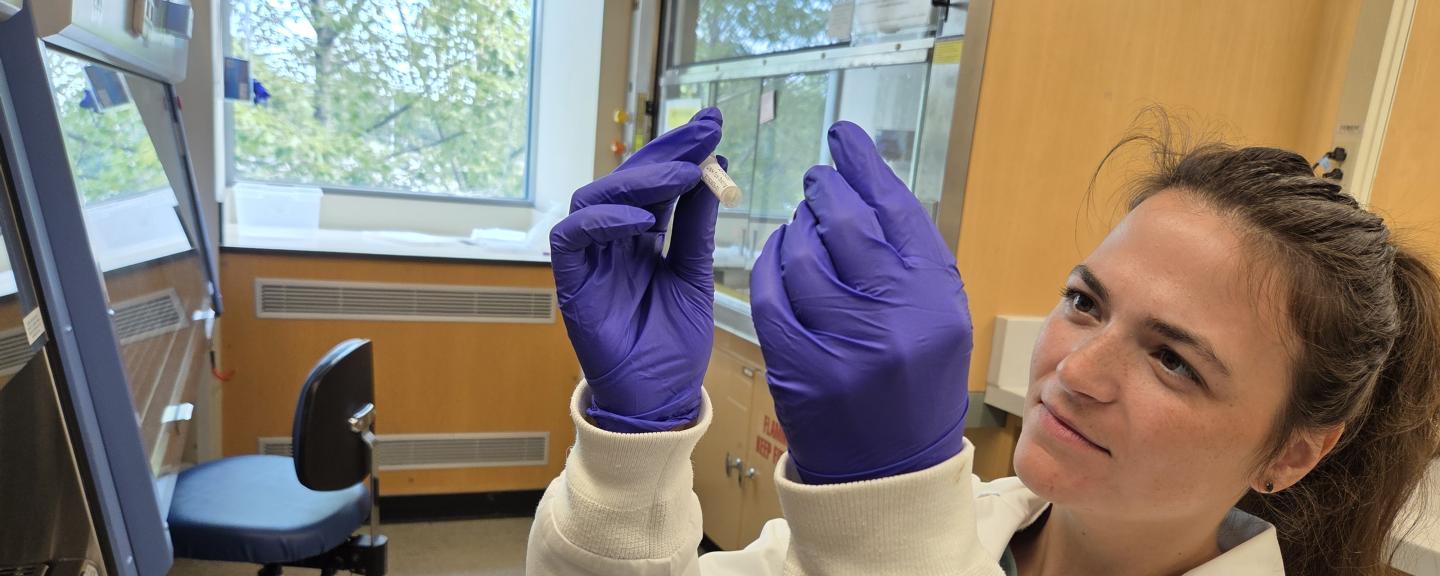
Elyse Schappert, who lives in Wakefield, New Hampshire, wants her young daughter to have the same nature-infused childhood that she had. The spread of tick-borne diseases gives her apprehension, though, particularly after someone in their neighborhood was diagnosed with Powassan virus. Navigating this landscape has been easier thanks to UNH’s tick testing service.
The testing is done on the Durham campus by a small crew in the Collaborative Core Wet Lab, which was previously used to test for coronavirus during the COVID pandemic. Since April 2025, it’s been repurposed to provide pathogen testing of ticks, among other things, in exchange for a $75 fee.
That fee covers the cost of DNA sequencing to determine which pathogens a specific tick is carrying. Results are typically emailed to users within three days, and results can be mailed by request. For more details about the process, visit unh.how/tick.
The collective results of the tests confirm why the service is valued by its users.
“Roughly 30% of the ticks carry Lyme disease, and roughly 40% carry some kind of pathogen,” says Seth Goodnight, one of the supervisors of the so-called “CoCo Lab.”
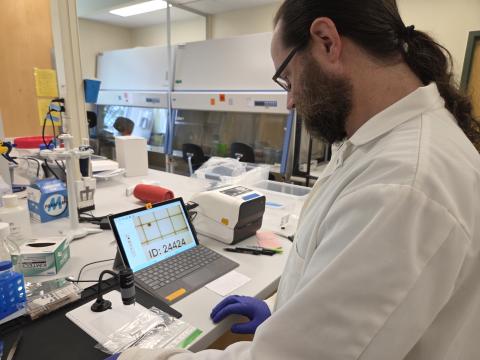
Most of the ticks sent in are black-legged ticks, formerly known as “deer ticks.” The cadence of submissions mirrors the life cycle of those ticks, with peaks in April and then again in October. Geographic distribution seems to follow areas of concentrated human population, leading Goodnight to conclude, “I don’t think there’s a hot spot in the state — they’re everywhere.”
The testing service is part of a suite of tick-related activities at UNH, including research into the transmission patterns of pathogens and outreach programs that provide information about how to prevent bites and what to do you get bitten by a tick.
Ticks are an entrenched part of the local environment, says Shyloh Favreau, diagnostic services program manager for Extension. Extension’s goal, he says, is “about being aware and taking all the steps necessary. It’s about educating and lowering the transmission of tick-borne diseases in New Hampshire.”
Users of the service can gain important information about their risk of contracting a disease from a tick. Finding a pathogen in the tick doesn’t confirm transmission to its host, but it can inform healthcare decisions.
The most common pathogen detected is Borrelia burgdorferi, the cause of Lyme disease, which has been found in 32% of submitted ticks. The next most common are Babesia mocroti (14%) and Anaplasma phagocytepenium (7%). Black-legged ticks are far more likely to carry disease than dog ticks, although both can be carriers of the rare but serious Powassan virus, which has been detected in fewer than 1% of samples.
Although rare, Powassan is a concern because there is no pharmaceutical treatment, and severe cases can cause encephalitis or meningitis. Additionally, while Lyme transmission requires a tick to remain embedded for 24 to 48 hours, Powassan can be transmitted within 15 minutes.
Powassan feels like a present danger for Schappert, but she refuses to let the threat of tickborne disease dampen her and her family’s outdoor adventures.
“Growing up in nature is something that I was able to experience, so it’s a priority for me in raising my daughter,” Schappert says. Should they find a tick embedded, she knows that she can have fast and reliable responses to her concerns, thanks to UNH.