Carsey Candidate Policy Forums
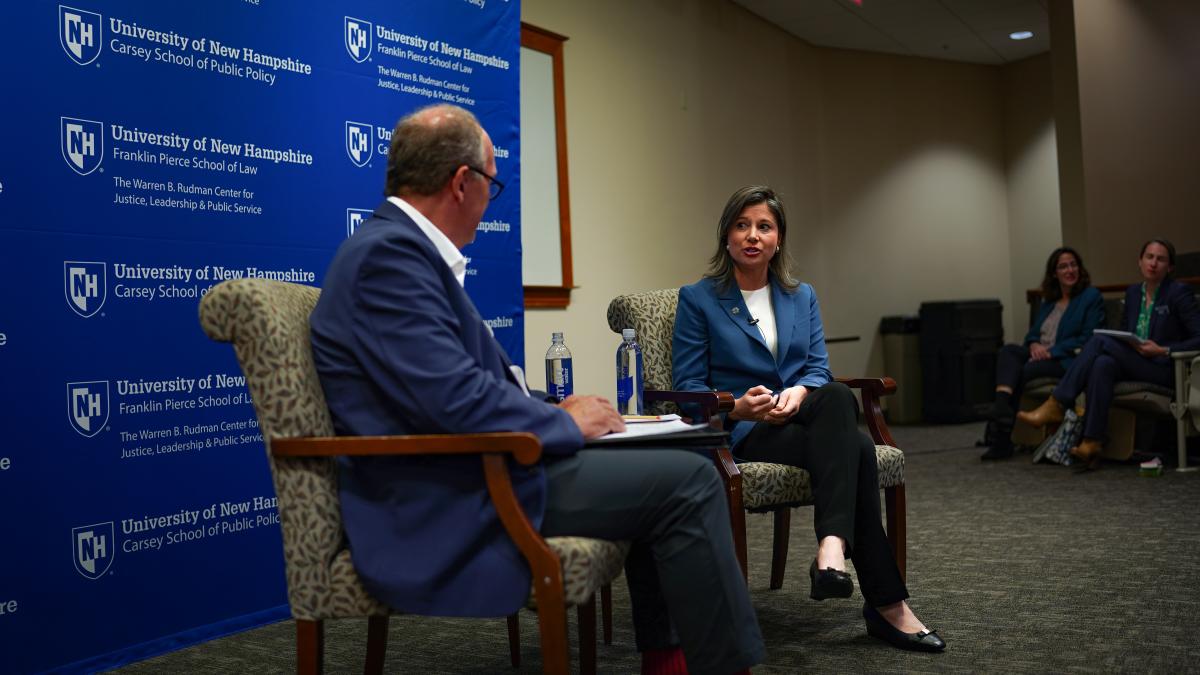
New Hampshire voters are deciding two U.S. House races and a U.S. Senate seat on Nov. 3, and this fall, the Carsey School of Public Policy gave Granite Staters the chance to hear each candidate’s case. No debate, no 30-second ads, just a 35-minute moderated discussion.
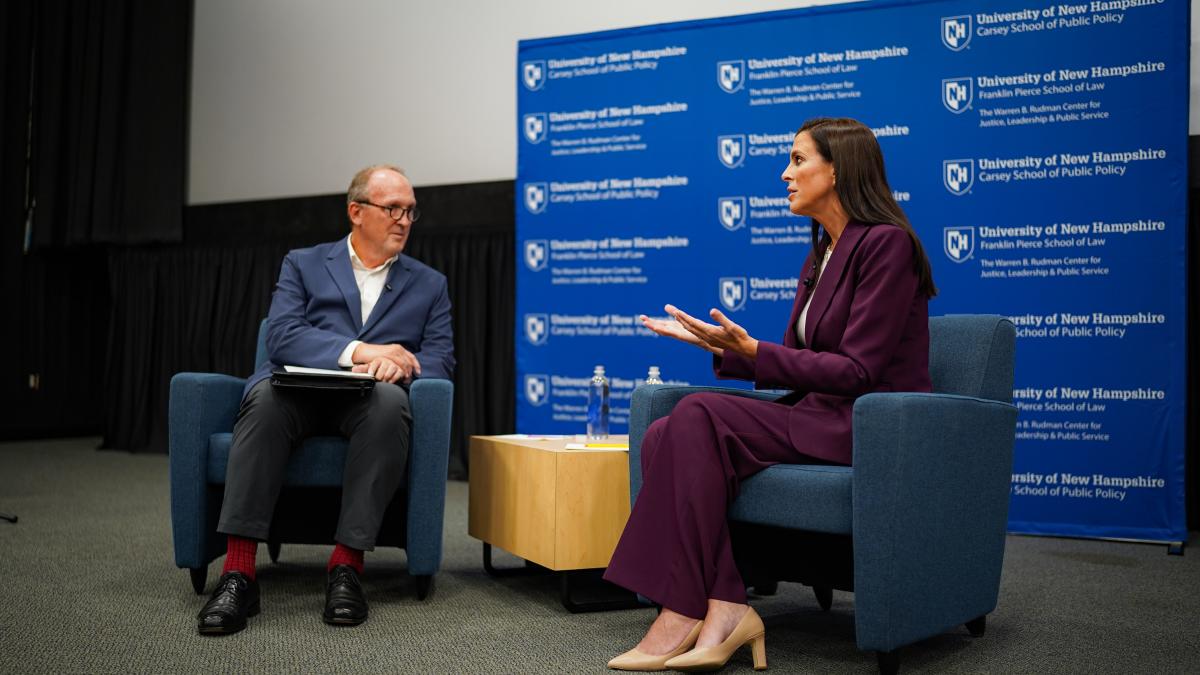
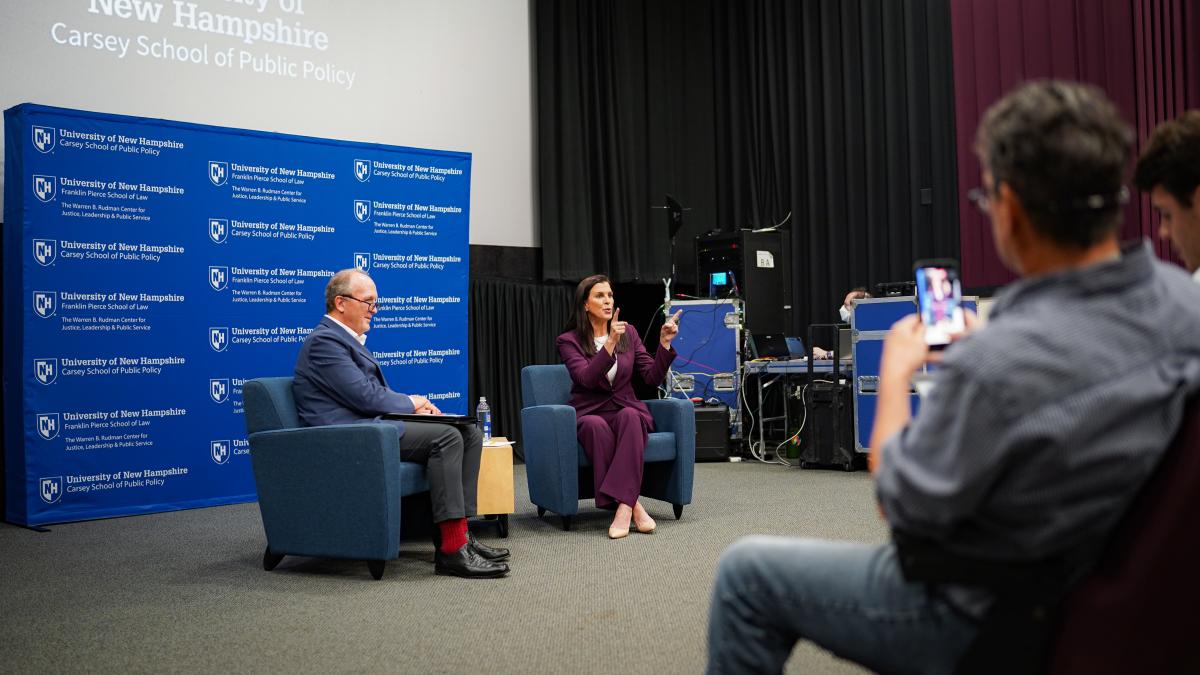
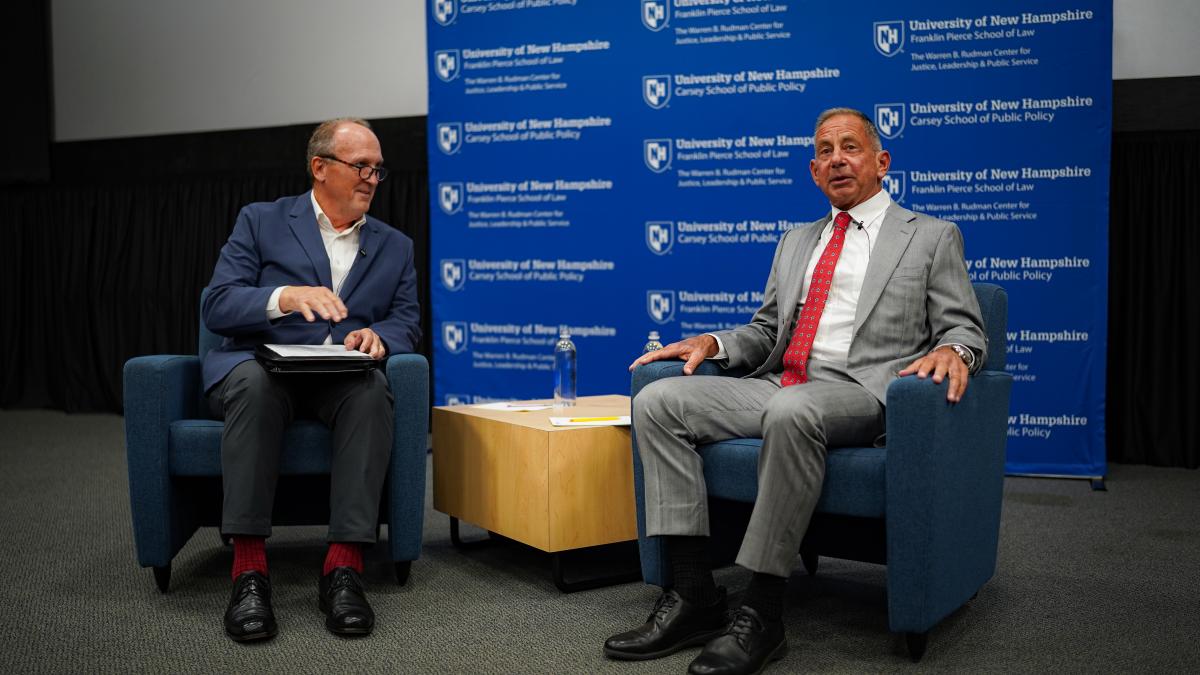
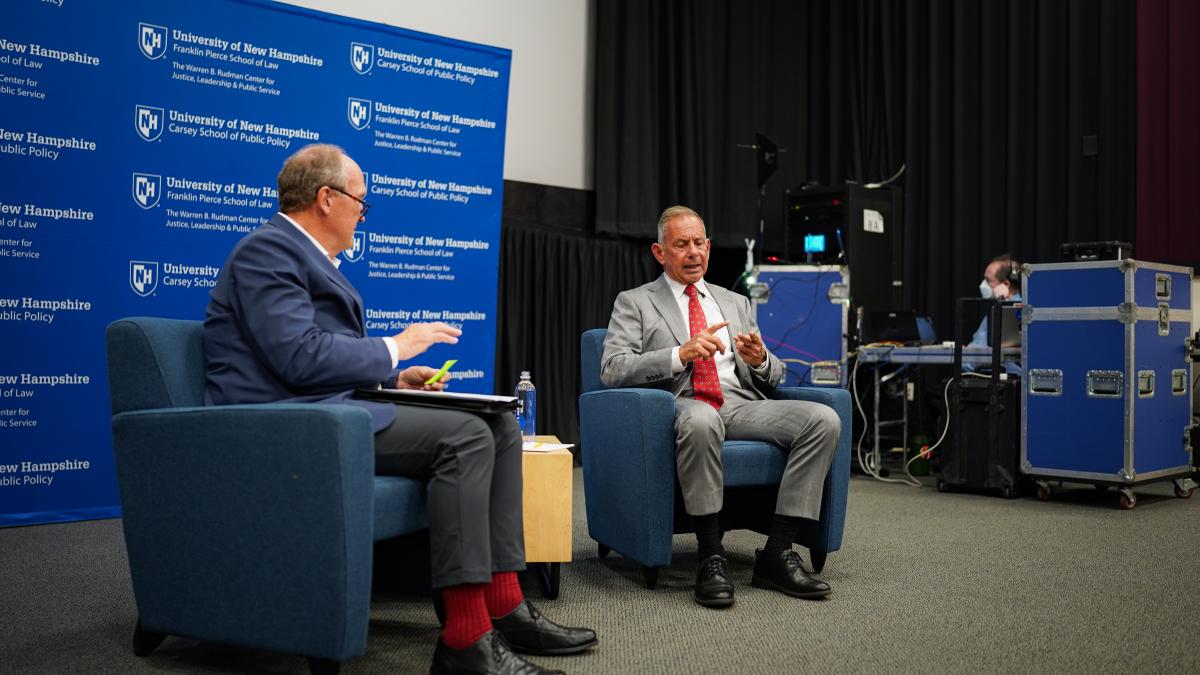
The Candidate Policy Forums started on Oct. 5 in Durham with nominees from the 1st Congressional District, Stefany Shaheen and Anthony DiLorenzo. The series ended in Concord on Oct. 7 with the nominees from the 2nd Congressional District, Maggie Goodlander and Lily Tang Williams. The timing of the series didn’t lend itself to a shared stage for the U.S. Senate race. Instead, Chris Pappas and John Sununu each sat down with Kevin Sullivan separately for a similar, recorded conversation.
Regardless of location and modality, each candidate got the same format: one minute to make their opening case, ~30 minutes to discuss the issues New Hampshire families deal with every day, and 60 seconds to address the audience and close in their own words. Each conversation was moderated by Kevin Sullivan, a UNH alumnus, associate editor at The Washington Post, and a Pulitzer Prize winner.
With Election Day around the corner, here’s what each conversation covered, and where to watch the full thing.
1st Congressional District: Stefany Shaheen vs. Anthony DiLorenzo
Democrat Stefany Shaheen, a Portsmouth native, framed her campaign around affordability. She pointed to a New Hampshire resident who saw his home heating oil bill nearly double this year and argued that tariffs have hit the district's Main Street businesses particularly hard. She also leaned on her family's personal experience with the region's housing shortage, calling for expanded low-income housing tax credits and more permanently affordable development.
Republican Anthony DiLorenzo, a Portsmouth business owner making his first run for office, argued Washington needs more people willing to solve problems without a partisan lens. On energy, he pushed for a new natural gas pipeline into New England and said he supports an "all of the above" approach, including nuclear power. On the Middle East conflict, he said it was time to bring American troops home, while on immigration, he called for reform that acknowledges New Hampshire employers' workforce needs without granting a path to citizenship for those who entered the country illegally.
2nd Congressional District: Maggie Goodlander vs. Lily Tang Williams
Incumbent Rep. Maggie Goodlander, a Democrat and Navy veteran, opened by calling it "the honor of my lifetime" to represent the district and centered her conversation on the cost of living, telling Sullivan that utility rate increases have gone unchecked for too long. She also made the case for congressional term limits, arguing that no one should treat the job as a career.
Republican Lily Tang Williams, a naturalized U.S. citizen who left Communist China, called herself "the embodiment of the American dream" and spoke about the toll of rising costs on her own constituents, describing an 81-year-old still working full shifts to make ends meet. On energy, she cited families facing summer electric bills topping $800 a month. Notably, both candidates support term limits for Congress — one of several points where the conversations revealed common ground rather than conflict.
U.S. Senate: Chris Pappas vs. John Sununu
Democrat Chris Pappas, a sitting congressman, centered his conversation on affordability and the influence of outside money in politics, noting he's been significantly outspent by dark-money groups backing his opponent. On artificial intelligence, he didn't mince words: citing a 10% estimate of existential risk, he called for Congress to regulate the industry rather than let it police itself. On energy, he pointed to New Hampshire's position "at the end of the transmission line" and the real cost of a recent home heating oil bill a constituent shared with him.
Republican John Sununu, a former U.S. senator and congressman, leaned on his engineering and private-sector background, framing himself as a pragmatic problem-solver. On AI, he focused on protecting vulnerable populations — older Americans and minors — from fraud and exploitation. On energy, he called for expanded natural gas access and permitting reform. Notably, both Senate candidates said that U.S. involvement in the recent Middle East conflict was a mistake made without a clear plan, another moment where the two conversations lined up more than they diverged.