
Why Pursue a DNP? For One Nursing Leader, There's Always Room to Grow
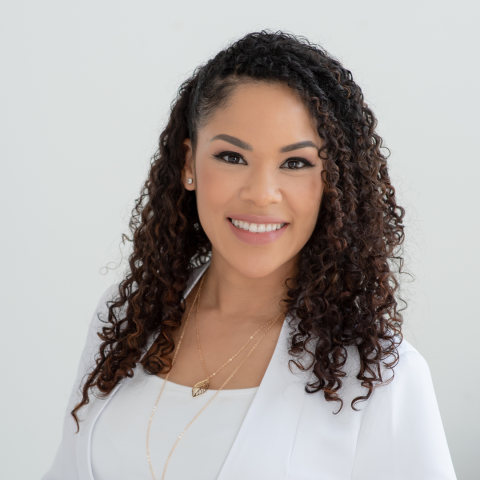
Massiel Eversley
Massiel Eversley grew up watching her mother serve the community as a women’s health nurse practitioner and knew she wanted to make an impact in healthcare.
Over the past two decades, she has risen from bedside nursing and clinical care roles to leadership positions at Brigham and Women’s Hospital, including nurse director and regional director of nursing. Today, she serves as associate chief nursing officer at South Shore Health in Massachusetts.
Even as she advanced in her career, Eversley never lost the desire to learn, which led her to UNH’s Doctor of Nursing Practice (DNP) program.
“One of the greatest privileges of leadership is being able to develop others, support nurses and care teams in practicing to their fullest potential, and help create systems that keep the communities we serve healthy,” Eversley says. “A DNP felt like the natural next step in preparing me to help shape meaningful change in healthcare.”
Why Pursue a DNP at UNH?
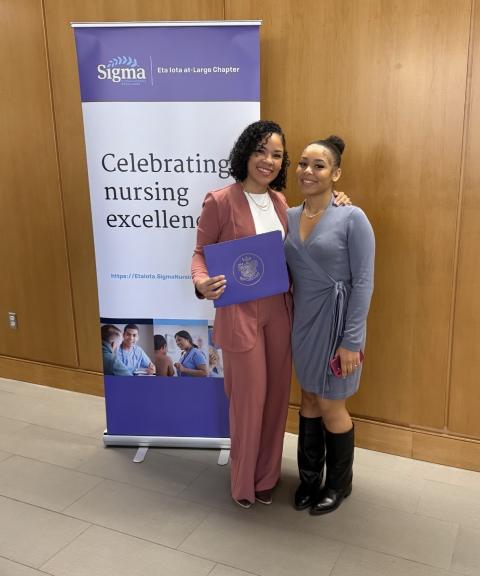
Massiel Eversley celebrates her induction into the Sigma Theta Tau nursing honor society at UNH with her daughter, who is also pursuing a career in nursing.
For experienced nurses and healthcare leaders, a DNP provides an opportunity to build on their professional knowledge through advanced study in evidence-based practice, quality improvement, and systems-level change.
The flexible structure of UNH’s DNP program, eight-week online courses, and supportive faculty appealed to Eversley as a working healthcare executive balancing personal responsibilities.
“I was working in a high-impact role within a busy healthcare system during a time of tremendous change across the industry,” she says. “I wanted to continue growing as a leader while ensuring I had the knowledge and preparation to contribute at the highest level.”
Bringing New Perspectives to Healthcare Leadership
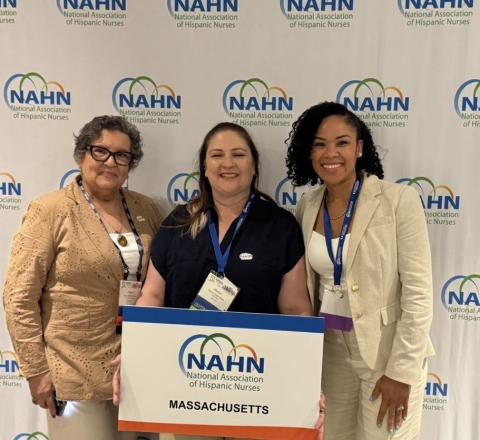
One of the most valuable aspects of the DNP program for Eversley has been immediately applying what she's learning to her work.
In her current role, she helps oversee nursing practice and patient care across multiple outpatient settings, with responsibilities that include workforce strategy, care delivery, and operational improvement.
“I have become much more intentional about ensuring that new initiatives, workflows, and practice changes in the ambulatory setting are supported by evidence rather than simply by tradition or convenience,” Eversley says. “I also try to model that expectation for my leaders so that the same approach carries through to frontline staff. My goal is to help create a culture where evidence-based practice is not viewed as an academic exercise, but as part of how we make everyday decisions and improve care.”
Eversley says one particular UNH course, Creative Leadership: Embracing Disruption and Innovation, has especially challenged her to question traditional approaches and embrace new ways of thinking.
“I have carried that mindset into my work, particularly when thinking about how we redesign systems, support teams through change, and create better ways of delivering care,” she says.
Turning Leadership Experience into a DNP Scholarly Project
A key component of the UNH DNP program is the scholarly project, which allows students to apply research and evidence-based practices to address real-world healthcare challenges.
Eversley’s project focused on developing a standardized process for implementing nurse-driven protocols - guidelines that allow nurses to perform certain patient care activities within clearly defined professional and organizational boundaries.
In outpatient settings, where nurses work across different specialties and responsibilities can vary, consistent processes can help ensure nurses are practicing safely and effectively while making full use of their education and training, according to Eversley.
“I saw an opportunity to create a structure that would allow nurses to contribute more fully to patient care while supporting consistency, safety, and collaboration across the care team,” Eversley says. “Ultimately, I hope this work helps strengthen ambulatory nursing practice and creates a model that can be sustained and expanded over time."
Standardized processes could help improve efficiency, strengthen collaboration, and allow patients to receive appropriate care without unnecessary delays, Eversley says.
Continuing to Grow and Lead
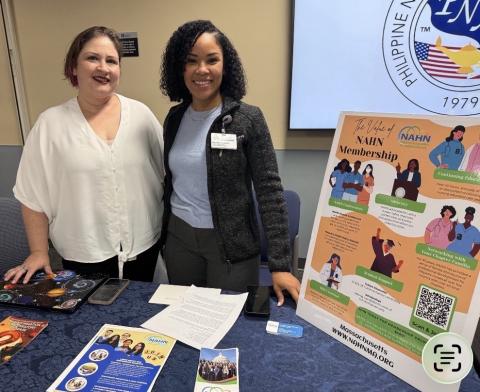
Professional growth doesn't have to stop once you've reached a certain level of success, and returning to school has reinforced that for Eversley. She says the experience has challenged her to look at familiar problems differently, strengthen how she uses evidence, and become more intentional about her leadership.
"The DNP program has helped me reflect more intentionally on my leadership style, how I approach change, and how I evaluate new ideas," she says. "It has also encouraged me to stay curious and open to opportunities to contribute to innovation rather than simply respond to it."
Looking ahead, Eversley hopes to continue contributing to healthcare innovation, organizational transformation, and systems improvement while exploring opportunities to teach and mentor future nurse leaders. As technology, care models, and patient needs evolve, she wants to be prepared to adapt and help shape those changes.
"One thing I have learned throughout my career is the importance of staying open to growth. Healthcare continues to change, and I believe strong leaders must be willing to keep learning, challenge their own thinking, and adapt along with it," Eversley says. "Pursuing the DNP has reminded me that in nursing it doesn't matter how much experience we gain; there is always an opportunity to grow, contribute in new ways, and become more intentional about the impact we want to have."