
New Grant Will Support Research on Emerging Cold-Hardy Grapevine Disease
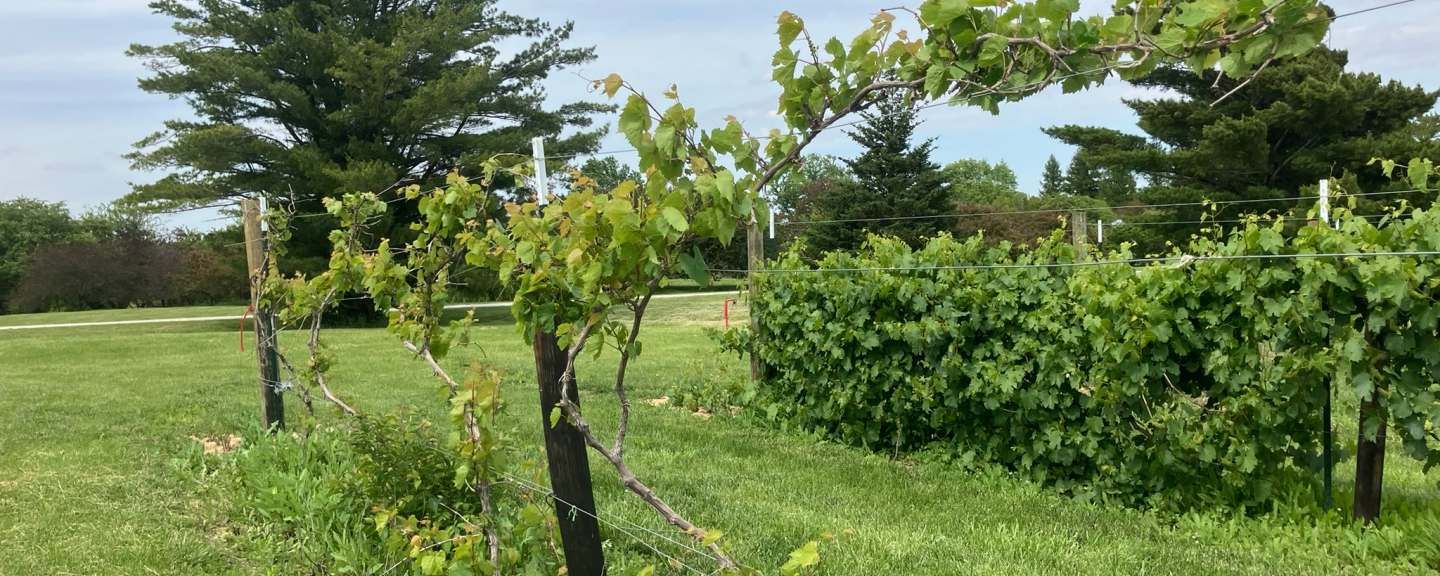
Cold hardy grapes are the foundation of a thriving $400 million industry that includes wine production and agrotourism and stretches from the northern Midwest to the Great Lakes to the Northeast, including New Hampshire. According to WineAmerica's 2025 Economic Impact Study, New Hampshire's wine industry supports an estimated 154,500 winery-related visits annually, generating approximately $29.5 million in tourism expenditures and contributing to local economies. However, cold hardy grapes are facing an emerging threat: a grapevine trunk disease caused by a species of fungi in the genus Fusarium.
While Fusarium species are well known as pathogens of many crops, their role in cold hardy grapevine trunk disease remains poorly understood. Key questions include where disease-causing populations originate, how and when they invading the grapevines, or how to detect them early enough to inform management decisions.
But researchers at UNH are working to change that.
A new research project funded by the USDA National Institute of Food and Agriculture will investigate an emerging Fusarium-associated disease affecting cold-hardy grapevines. The project, “Exploring Fusarium Trunk Decline, an Emerging Threat to Cold-Hardy Grapevines in the U.S.,” is led by Xiaochen Yuan, assistant professor, and Suzanne Slack, adjunct research faculty, both in the department of agriculture, nutrition, and food systems.
The project builds on several years of research by Yuan and Slack investigating the role of Fusarium species in grapevine decline in northern U.S. production regions.
Previous vineyard surveys recovered Fusarium species from declining grapevines, and pathogenicity studies demonstrated that some of these isolates can cause disease in both cold-hardy hybrid and Vitis vinifera grape cultivars. Substantial yield losses have also been documented in vineyards affected by decline, highlighting the need to better understand the biology, distribution, and management of this emerging disease.
The new project will expand this work across the Midwest, Great Lakes, and Northeast to determine the geographic distribution and genetic diversity of Fusarium populations associated with grapevine trunk disease, evaluate their ability to cause disease and mycotoxigenic potential, improve diagnostic approaches, and investigate factors that may influence disease development and management.
“An important part is figuring out how widespread this problem actually is,” says Slack. “We have data from the Midwest, but since we've been here [in New Hampshire], we've already been in contact with local vineyards having this problem, and we did find Fusarium inside their samples.”
The goal is to provide grape growers with practical tools for earlier disease recognition and science-based management recommendations that can reduce disease losses and protect vineyard productivity.
“Right now, it takes almost two months to determine if it's the correct Fusarium. There are some species that are non-pathogenic that could be in the wood,” says Slack. “So we need to test if it's the one that's pathogenic or the strains that are just kind of hanging out. We want to develop a quick way to tell a grower, ‘Yes, it's here,’ so they can make quick management decisions.”
“We won't say we'll completely eliminate it, but at least we can help our growers to manage it,” adds Yuan.
The project also represents an important collaboration among UNH researchers, USDA-ARS scientist Kristi Gdanetz MacCready, Extension specialists, diagnostic laboratories, and grape growers across the region. Results will be shared with growers and industry professionals through Extension programming, publications, diagnostic resources, and regional outreach.