
What Can You Do with a Forestry Degree? Five Career Paths to Explore
What can you do with a forestry degree? At the University of New Hampshire’s College of Life Sciences and Agriculture (COLSA), the Forestry B.S.F. prepares students for a range of career paths, including forest and conservation management, forestry consulting, urban forestry, geospatial analysis, surveying, research, and education and outreach. The program combines ecological principles with practical resource management and hands-on fieldwork.
Forester or forest manager
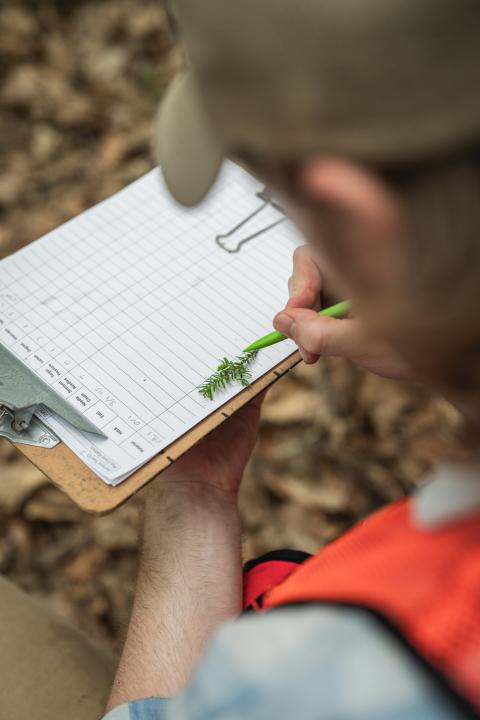
Foresters help manage forests for health, productivity and conservation. Their work may include assessing forest conditions, planning how land is managed and considering how choices affect soil, water, wildlife habitat and forest products. Some foresters work outdoors collecting information; others spend time analyzing data, writing plans or coordinating with landowners and colleagues.
Foresters work in government, private industry and consulting. The U.S. Bureau of Labor Statistics says a bachelor’s degree in forestry, natural resources or a related field is typical for forester and conservation scientist roles. UNH’s forestry degree is accredited by the Society of American Foresters and emphasizes sustainable management of forests.
Forestry consultant
Consulting foresters work with clients such as private landowners, businesses or public agencies. Depending on the project, they may assess forest resources, help develop a management plan or advise on how to meet particular land-use goals.
This path can suit someone who wants to apply forestry knowledge to different properties and client needs. UNH lists forestry consulting among the potential career areas for its forestry graduates. Work and qualifications vary by employer, so students exploring this option can compare job postings and talk with professionals about the types of projects they handle.
Urban forester
Urban foresters work with trees in towns and cities, including street trees, parks and other public spaces. Their work can involve assessing tree health, planning care and replacement, and helping communities manage their tree resources.
Urban forestry connects knowledge of trees and forest health with the needs of developed places. UNH identifies urban forestry as a potential career area for forestry majors. The role may involve working with municipal staff, contractors or community members, and job titles and responsibilities can differ by employer.
Geospatial analyst or surveyor
Geospatial work uses maps and location-based data to understand landscapes. In forestry, that can help professionals examine where forest resources are, track changes or support planning. Geographic information systems, or GIS, are computer tools for storing, analyzing and displaying information tied to specific places.
Surveying is another path listed by UNH. Surveyors collect measurements that help describe land and its features. Some surveying roles, particularly licensed land surveyors who certify property boundaries, require additional qualifications and state licensure. These roles can combine fieldwork with computer-based mapping and analysis. The Bureau of Labor Statistics notes that GIS and remote-sensing knowledge can be relevant to conservation scientists and foresters.
Research, education or outreach
Forestry graduates may also contribute to research or help others understand forest resources. Research technicians support studies by gathering field data, making observations or assisting with analysis. Education and outreach roles share information with landowners, students, communities or other audiences.
UNH lists research, research technician, education and outreach among potential career areas. These paths differ in their day-to-day work: some focus on collecting and analyzing data, while others center on explaining forestry topics or helping people apply information to land-management decisions. Specific research and teaching positions may require additional experience or an advanced degree.
How to explore forestry careers as an undergraduate
The five paths above are examples, not a ranking of the most common or highest-paying jobs. Forestry work can involve a mix of outdoor fieldwork, office-based planning, data analysis and communication. The balance depends on the position and employer. The Bureau of Labor Statistics notes that foresters may work in offices, laboratories and outdoors, sometimes in remote locations and challenging conditions.
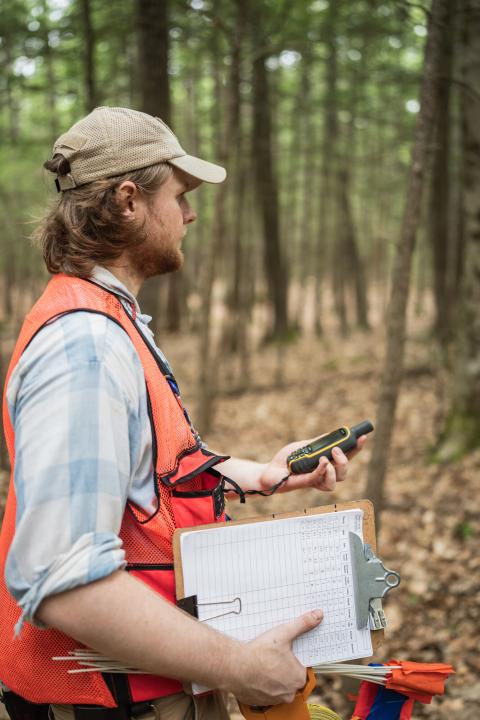
At UNH, forestry students study topics such as forest ecology, silviculture, forest health, forest inventory and modeling, and natural-resource policy. The program emphasizes lab and fieldwork in university woodlands and the White Mountain National Forest. Those experiences can help students learn which parts of forestry interest them and what skills different roles may require.
As you consider a forestry major, look at job postings for roles that sound interesting. Note the qualifications employers request, including education, field experience, technical skills or credentials. You can also ask faculty, advisers and forestry professionals what a typical week looks like in their work.
Forestry is one of the undergraduate programs in UNH COLSA’s Department of Natural Resources and the Environment. Explore the department’s academic programs, research and opportunities to learn more about the areas of study connected to natural resources.